

Bull's Blood - Beet Seeds
🚚 FREE SHIPPING for all orders over $79!
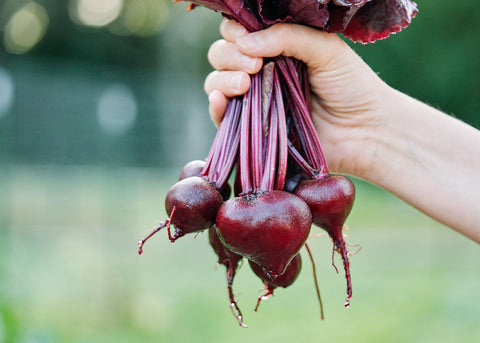
Bull’s Blood beet is a 19th-century heirloom grown as much for its dark burgundy leaves as for its deep red roots. The foliage brings dramatic color to salad mixes and garden beds, while the roots develop a rich, earthy flavor for roasting and pickling.
Harvest baby leaves when they are glossy and tender, or let the roots size up for the kitchen. Few vegetables carry such a moody, handsome color from leaf to root. Bull’s Blood earns its place before the first beet is even pulled.
Scientific name: Beta vulgaris
Life cycle: Biennial, typically grown as an annual
Days to maturity: 35 days baby leaf; 58 days roots
Harvest type: Roots and baby leaf
Every order is packed with care by our small team in Pennsylvania and typically ships within 2–3 business days—often by the next business day. We ship throughout the United States using USPS and UPS.
Unopened items may be returned within 30 days of delivery. If an order arrives damaged, incomplete, or incorrect, please contact us so we can make it right.
We stand behind every packet we sell. Our seeds are carefully selected, tested for germination, untreated, and guaranteed to be true to variety.
Your seeds are covered for one year from the date of purchase. If they fail to germinate under reasonable growing conditions, arrive damaged, or do not grow true to type, contact us and we’ll make it right with a replacement, store credit, or refund.
FAMILY OWNED
Hand packed in Pennsylvania by our family.
LAB TESTED
Third-party tested for reliable germination.
NON-GMO
Open-pollinated varieties for home gardens & seed saving.
UNTREATED SEED
Never coated with chemical seed treatments.
Beet Growing Basics

Beets trace their ancestry to the Mediterranean region, where their leafy tops were eaten long before the swollen roots became a familiar table vegetable. Today’s garden beets may be round, flattened, cylindrical, red, golden, white, or boldly striped, and both the roots and tender leaves are useful in the kitchen.
Closely related to Swiss chard, beets are cool-season biennials grown for harvest during their first year. They develop their best color, sweetness, and texture in loose soil with steady moisture and mild temperatures, moving quickly from clustered seedlings to tender roots ready for the table.
Direct sow beets about 2–4 weeks before the expected last spring frost, once the soil can be worked and has warmed to about 45–50°F.
Make small sowings every 2–3 weeks for a longer harvest. For fall crops, sow early enough to allow about 55–70 days before the first hard freeze. Beets tolerate light frost and often become sweeter in cool weather.
Sow seed clusters about ½ inch deep and 1 inch apart in loose, well-drained soil. Keep the seedbed evenly moist until seedlings emerge.
Because each corky “seed” may produce several seedlings, thinning is usually necessary. Space plants about 3 inches apart for most varieties, or slightly wider for large and cylindrical types. Young thinnings are edible.
Choose a site with full sun to light afternoon shade and soil that has been loosened deeply enough for roots to form without obstruction.
Keep moisture steady and mulch lightly once seedlings are established. Avoid heavy nitrogen, which can produce large tops and smaller roots. Weed shallowly because beet roots are easily disturbed near the soil surface.
Harvest baby beets when roots reach about 1–1½ inches across. Most varieties remain tender up to about 2½–3 inches, though quality depends on the variety.
Pull when the soil is moist, then trim the tops to about 1 inch for storage. Beet greens may be harvested young, but leave enough foliage to support the developing root.
I am excited to try these.


