How to Grow Bachelor’s Buttons

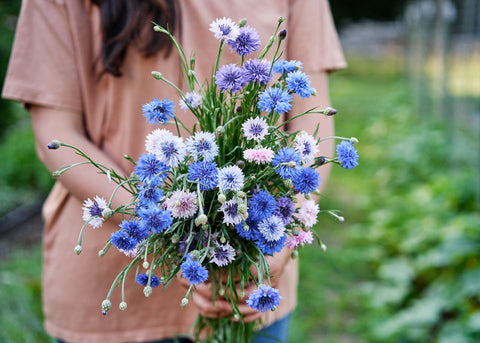
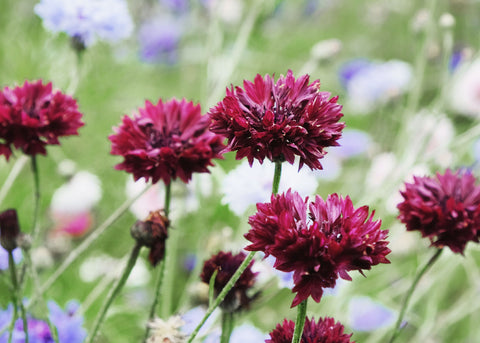
Bachelor’s buttons (Centaurea cyanus), also known as cornflowers, have brightened fields and cottage gardens for centuries. Once a common sight among European grain fields, these cheerful blooms became treasured garden flowers for their brilliant blue color, though modern varieties also bloom in shades of white, pink, lavender, purple, and burgundy.

Easy to grow and generous in bloom, bachelor’s buttons are equally at home in cutting gardens, pollinator plantings, and wildflower borders. Their long stems make excellent cut flowers, while the nectar-rich blooms attract bees, butterflies, and other beneficial insects throughout late spring and early summer.

Growing Guide

Direct sow bachelor’s buttons outdoors 2–4 weeks before the last expected spring frost, as young plants tolerate cool temperatures well. They establish quickly in cool weather and often bloom before the heat of summer arrives.

For a longer flowering season, sow additional seed every few weeks through late spring. In regions with mild winters, seeds may also be sown in early fall for earlier spring blooms the following year.

Sow seeds about ¼ inch deep in prepared soil and keep evenly moist until germination, which usually occurs within one to two weeks.

Although they can be started indoors, bachelor’s buttons develop a strong taproot and generally perform best when direct sown. Thin seedlings to 6–10 inches apart to encourage sturdy stems and good airflow.

Plant in full sun and well-drained soil. Bachelor’s buttons perform well in average garden soil and often produce stronger stems when not overfertilized.

Water regularly while plants establish, then only during prolonged dry periods. Deadheading encourages continued flowering, while allowing a few blooms to mature provides seed for future seasons.

Bachelor’s buttons are excellent companion flowers for vegetable gardens, attracting bees, hoverflies, lacewings, and other beneficial insects that help pollinate crops and support natural pest control.

Harvest flowers when they are fully open but still fresh for the longest vase life. Cut stems during the cool morning hours and place them immediately into water.

Frequent cutting encourages additional blooms throughout the season. Flowers also dry well, retaining much of their color for wreaths and dried arrangements.

Bachelor’s buttons are grown primarily as ornamental and cut flowers. Their vivid blooms bring color to cottage gardens, meadow plantings, borders, and fresh bouquets.

The edible petals are sometimes used as colorful garnishes for salads, desserts, baked goods, teas, and herbal blends, adding visual appeal with only a mild flavor.

Bachelor’s buttons are generally easy to grow with few serious problems. Aphids, slugs, or caterpillars may occasionally feed on young plants, while overcrowded conditions can encourage powdery mildew or stem diseases.

Provide good spacing, water near the soil, and remove spent plants at season’s end to promote healthy growth.

Bachelor’s buttons are insect-pollinated, and different varieties may cross when grown nearby. Grow one variety for seed or provide isolation if maintaining a specific flower color is important.

Allow flower heads to dry completely on the plant until they become brown and papery. Break apart the dry seed heads to collect the slender seeds, remove the chaff, and store the seed in a cool, dark, dry place.

  • Direct sow for the strongest plants.
  • Successive sow every few weeks for extended blooms.
  • Deadhead regularly to encourage flowering.
  • Excellent companion flower for vegetables and pollinator gardens.
  • Leave a few blooms to self-seed if desired.