

Flamingo Feather - Celosia Seeds - Certified Naturally Grown (CNG)

SKU: FCA105-1000
Open-Pollinated
Certified Naturally Grown
Sale price:$17.20 Regular price: $18.95
Choose size

🚚 FREE SHIPPING for all orders over $79!

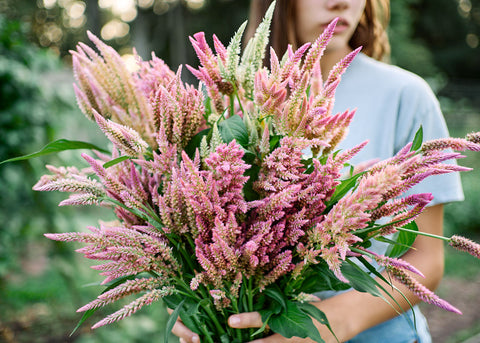
Flamingo Feather celosia produces airy pink plumes on long stems, softening as they age into blush tones that look graceful in the garden and striking in a vase. Also known as wheat celosia, this form has a lighter, more natural movement than crested types, with feathery blooms that rise above the foliage.

The stems are excellent for fresh cutting and drying, holding their texture long after summer has passed. Plant Flamingo Feather for height, softness, and that quiet bit of color that makes bouquets feel gathered rather than arranged.

Every order is packed with care by our small team in Pennsylvania and typically ships within 2–3 business days—often by the next business day. We ship throughout the United States using USPS and UPS.

Unopened items may be returned within 30 days of delivery. If an order arrives damaged, incomplete, or incorrect, please contact us so we can make it right.

View Shipping Policy

We stand behind every packet we sell. Our seeds are carefully selected, tested for germination, untreated, and guaranteed to be true to variety.

Your seeds are covered for one year from the date of purchase. If they fail to germinate under reasonable growing conditions, arrive damaged, or do not grow true to type, contact us and we’ll make it right with a replacement, store credit, or refund.
View Refund, Return & Guarantee Policy

Previous
Next

NON-GMO

Open-pollinated varieties for home gardens & seed saving

UNTREATED SEED

Safe seed, free from chemical treatments

HAND PACKED IN PA

Prepared with care by our family and small team

100% SATISFACTION

Third-party lab tested and backed by our guarantee

Growing Guide

Celosia is one of summer’s most distinctive flowers, producing vibrant blooms in fiery shades of red, orange, yellow, pink, burgundy, and cream. Native to tropical regions of Africa and Asia, it thrives in heat and sunshine, bringing bold color and unusual texture to flower beds, cutting gardens, and dried arrangements.

Whether grown for feathery plumes, upright wheat-like spikes, or crested “cockscomb” blooms, celosia rewards gardeners with months of continuous color. Its long-lasting flowers attract pollinators, make excellent fresh and dried cut flowers, and continue performing well through the hottest days of summer.

Scientific name: Celosia argentea var. spicata
Days to maturity: 90-100
Seed depth: 1/8"
Days to sprout: 7-14
Plant spacing: 6-12"
Row spacing: 18-24"
Light requirements: sunny
Plant height: 24-36"
Life cycle: annual
Frost hardy: no

Start celosia indoors 6–8 weeks before your last expected spring frost, or direct sow outdoors after all danger of frost has passed and the soil has thoroughly warmed. Celosia loves heat and grows best once daytime and nighttime temperatures are consistently warm.

Because it matures relatively quickly, celosia can also be direct sown in early summer for late-season flowers. In areas with long growing seasons, succession sowings every few weeks provide fresh blooms well into fall.

Sow seeds on the surface or cover very lightly with about ⅛ inch of seed-starting mix. Keep the soil consistently moist and warm until germination, which typically occurs within one to two weeks.

Provide bright light immediately after seedlings emerge to prevent stretching. Harden plants gradually before transplanting, spacing most varieties 8–12 inches apart, while larger branching types benefit from 12–18 inches of spacing.

Plant celosia in full sun and fertile, well-drained soil. Warm temperatures and consistent moisture encourage vigorous growth and abundant flowering, although established plants tolerate short periods of dry weather.

Avoid excessive nitrogen fertilizer, which encourages leafy growth at the expense of flowers. Harvest flowers regularly or remove spent blooms to encourage continued production throughout the season.

Celosia makes an excellent companion in vegetable and flower gardens by attracting bees and other pollinating insects. Its upright growth also adds height and color among zinnias, cosmos, sunflowers, and other summer annuals.

Harvest celosia when flowers are fully developed and brightly colored before significant seed begins forming. Cut stems during the cool morning hours and remove lower foliage before placing them into water.

Celosia is one of the finest flowers for drying. Hang bunches upside down in a warm, dry, well-ventilated location until completely dry, where they retain much of their color for months.

Celosia is grown primarily as an ornamental flower valued for fresh bouquets, dried arrangements, landscape color, and pollinator support.

In many parts of Africa and Asia, certain varieties are also grown as leafy vegetables, with young leaves harvested and cooked much like spinach. Garden varieties grown for flowers, however, are most often enjoyed for their exceptional beauty and long vase life.

Celosia is generally easy to grow but may occasionally attract aphids, spider mites, whiteflies, or caterpillars. Healthy plants usually recover quickly from minor feeding damage.

Provide good spacing and avoid overly wet soils to reduce root rot and fungal diseases. Water near the base of the plant to keep foliage dry and improve air circulation.

Celosia is primarily self-pollinating, although insects may occasionally transfer pollen between nearby plants. Different varieties can cross, so grow one variety for seed or provide isolation if maintaining a specific type or flower color.

Allow flower heads to remain on the plant until they begin drying and small black seeds are easily released when the bloom is gently shaken or rubbed. Cut mature flower heads, finish drying indoors if needed, then crumble the heads over a tray or paper to collect the seed. Screen away the chaff and store thoroughly dry seed in a cool, dark, dry place.

  • Wait for consistently warm weather before planting outdoors.
  • Harvest flowers often to encourage continued blooming.
  • Excellent for both fresh and dried arrangements.
  • Avoid overfertilizing with nitrogen.
  • Performs exceptionally well during hot, humid summers.