
Laxton’s Progress #9 - Organic Shelling Pea Seeds

SKU: VPA103
Open-Pollinated
Certified Organic
Heirloom
Sale price:$4.95 Regular price: $5.95
Choose size

🚚 FREE SHIPPING for all orders over $79!

Laxton’s Progress #9, bred in England in the early 1900s, is a dwarf shelling pea that loads short vines with fat pods holding 7–9 sweet peas each. No tall trellis needed—just a short fence or none at all.

Peas fix nitrogen and bring protein and vitamin C to the plate. Sow as soon as soil can be worked, keep roots cool with mulch, and pick frequently. A classic for early bowls of buttered peas.

Every order is packed with care by our small team in Pennsylvania and typically ships within 2–3 business days—often by the next business day. We ship throughout the United States using USPS and UPS.

Unopened items may be returned within 30 days of delivery. If an order arrives damaged, incomplete, or incorrect, please contact us so we can make it right.

View Shipping Policy

We stand behind every packet we sell. Our seeds are carefully selected, tested for germination, untreated, and guaranteed to be true to variety.

Your seeds are covered for one year from the date of purchase. If they fail to germinate under reasonable growing conditions, arrive damaged, or do not grow true to type, contact us and we’ll make it right with a replacement, store credit, or refund.
View Refund, Return & Guarantee Policy

Plant seeds directly into the garden starting 3-5 weeks before average last frost date or as soon as the soil can be worked. Optimum soil temperature for seed germination is 50-70 degrees. It can take seed about 2 weeks to germinate at 50 °f, less as the soil warms. For taller varieties, use crop supports such as a trellis or chicken wire to keep vines upright. Planting double rows of peas on each side of a trellis will result in a more productive harvest. For a fall crop, sow about 2 months before frost. Keep seeds well watered to encourage good germination.

Scientific name: pisum sativum
Days to maturity: 55-65
Seed depth: 1"
Days to sprout: 7-14
Plant spacing: 2-3"
Row spacing: 24"
Light requirements: sunny
Plant height: 15-20"
Life cycle: annual
Frost hardy: yes

Previous
Next

NON-GMO

Open-pollinated varieties for home gardens & seed saving

UNTREATED SEED

Safe seed, free from chemical treatments

HAND PACKED IN PA

Prepared with care by our family and small team

100% SATISFACTION

Third-party lab tested and backed by our guarantee

Growing Guide

Peas are among the world’s oldest cultivated food crops, with archaeological evidence reaching back thousands of years to the Near East. Their early role as a dependable dried food crop eventually expanded into the tender shelling, snow, and sugar snap peas grown in gardens today.

Shelling peas are grown for the tender seeds inside, snow peas are gathered while the pods remain flat, and sugar snap peas are picked once the pods become plump, crisp, and sweet. Direct sow into cool, workable soil, provide support early, and harvest regularly before summer heat slows flowering.

Direct sow peas in early spring as soon as the soil can be worked. Young plants tolerate light frost, and peas grow best while temperatures remain cool.

For a longer harvest, make two or three small sowings about one week apart. Peas may also be planted in late summer for a fall crop where the season is long enough for them to mature before hard freezes.

Sow peas directly in the garden about 1 inch deep and 1–3 inches apart, with rows spaced 18–24 inches apart. Plant into moist, well-drained soil rather than cold, waterlogged ground, where seeds are more likely to rot.

Install a trellis or other support before sowing tall or vining varieties so young roots are not disturbed later. Dwarf varieties generally do not require a trellis, though light support can help keep plants upright and make harvesting easier.

Grow peas in full sun and well-drained soil. Compost can be added before planting, while heavy applications of nitrogen fertilizer may encourage leafy growth at the expense of flowers and pods.

Water during dry periods and use shallow cultivation or mulch to control weeds and conserve moisture. Pea roots grow close to the soil surface, so work carefully around the plants.

Check vines frequently once pods begin to mature, since peas can become starchy within only a few days.

Shelling peas: Pick when pods are rounded and filled, while the peas remain tender.

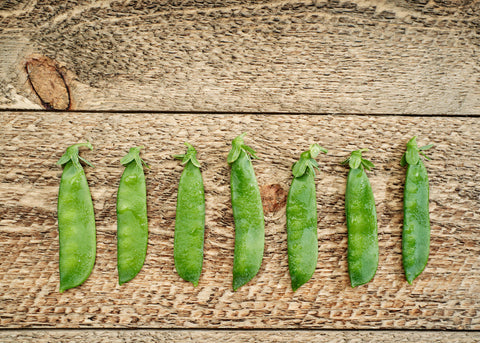
Snow peas: Pick when pods are full length but still flat.

Sugar snap peas: Pick when pods are plump, crisp, and nearly filled.

Hold the vine with one hand while removing pods with the other, and cool the harvest promptly to preserve sweetness.

Peas offer plant protein, fiber, complex carbohydrates, folate, vitamin C, vitamin K, and several minerals. They also contain polyphenols, flavonoids, carotenoids, and other antioxidant compounds, giving this small garden crop more substance than many tender vegetables.

Shelling peas are best eaten soon after harvest, before their sugars begin changing to starch. Steam, freeze, or add them to soups, pastas, and grain dishes. Snow and snap peas are enjoyed pod and all in salads, stir-fries, and fresh garden snacks.

Watch for aphids on curled, sticky, or discolored foliage. Beneficial insects such as lady beetles, lacewings, and hoverfly larvae often help keep populations in check.

Powdery mildew may appear later in the season as white growth on leaves and pods. Planting early, allowing good airflow, watering at soil level, rotating crops, and choosing resistant varieties can help reduce disease problems. Well-drained soil also lowers the risk of seed decay and root rot.

Save seed from healthy, open-pollinated plants that show the expected traits of the variety. Leave selected pods on the vines until they become dry and brown and the peas inside are fully hard.

If wet weather threatens, gather the pods and finish drying them in a protected, well-ventilated place. Shell only when completely dry, then store the seed in a labeled, airtight container in a cool, dark, dry location.

  • Install trellising before seedlings emerge.
  • Sow small batches about one week apart to spread the harvest.
  • Pick during the cooler part of the day and refrigerate promptly.
  • Remove diseased vines after the final harvest.
  • Healthy pea vines can be composted once the crop is finished.