
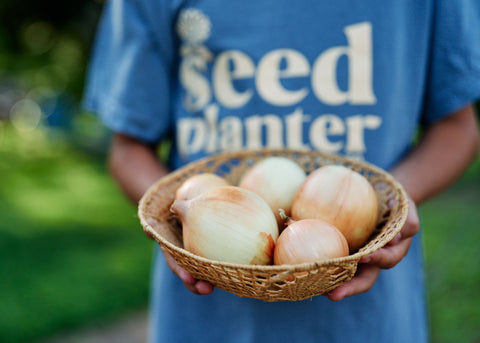
Walla Walla - Organic Onion Seeds

SKU: VON109
Open-Pollinated
Certified Organic
Heirloom
Price:$5.95
Choose size

🚚 FREE SHIPPING for all orders over $79!

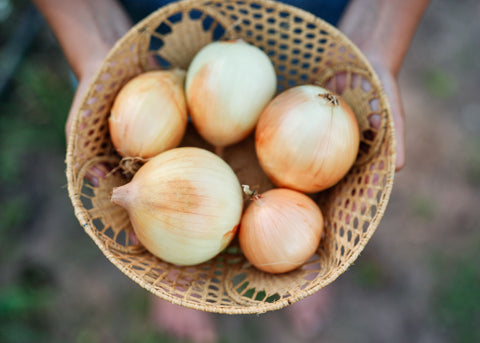
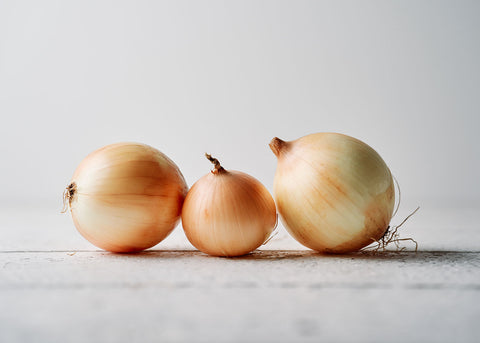
Walla Walla’s story starts in the 1800s, when a French sweet onion made its way to Washington’s fertile soil — and grew into a legend. Renowned for its candy-sweet flavor and large size, this heirloom is made for fresh eating, not long storage.

Slice it thick for juicy burger toppers, batter into golden onion rings, or grill whole until meltingly tender. Mild and low in sulfur, it’s famously gentle on the eyes and palate alike.

Every order is packed with care by our small team in Pennsylvania and typically ships within 2–3 business days—often by the next business day. We ship throughout the United States using USPS and UPS.

Unopened items may be returned within 30 days of delivery. If an order arrives damaged, incomplete, or incorrect, please contact us so we can make it right.

View Shipping Policy

We stand behind every packet we sell. Our seeds are carefully selected, tested for germination, untreated, and guaranteed to be true to variety.

Your seeds are covered for one year from the date of purchase. If they fail to germinate under reasonable growing conditions, arrive damaged, or do not grow true to type, contact us and we’ll make it right with a replacement, store credit, or refund.
View Refund, Return & Guarantee Policy

Long day onion. Start seeds indoors 6–8 weeks before transplanting to the garden. Optimal soil temperature for germination is 65–80°F. Transplant outdoors 2–4 weeks before your average last frost. If seedlings begin to flop, trim tops to about 3”. Plant in full sun and fertile, well-drained soil. Keep evenly watered and free of weeds for best bulb growth. Harvest after tops begin to fall and bulbs have sized up. Long day onions are best suited for northern growers, where increasing summer daylight triggers bulb formation.

Scientific name: allium cepa
Days to maturity: 90-115
Seed depth: 1/4-1/2"
Days to sprout: 7-14
Plant spacing: 4-6"
Row spacing: 12-24"
Light requirements: Full Sun
Plant height: 6-18"
Life cycle: Biennial
Frost hardy: Yes

Previous
Next

NON-GMO

Open-pollinated varieties for home gardens & seed saving

UNTREATED SEED

Safe seed, free from chemical treatments

HAND PACKED IN PA

Prepared with care by our family and small team

100% SATISFACTION

Third-party lab tested and backed by our guarantee

Growing Guide

For thousands of years, onions have followed people from garden to kitchen, adding depth and sweetness to meals made from the simplest ingredients. Beneath their upright green leaves, each bulb is built slowly, one fleshy layer at a time.

Onions may be grown as scallions, small fresh bulbs, large storage onions, or sweet slicing types. Their success depends on choosing a variety suited to local day length, establishing strong leafy growth early, and allowing the bulbs to mature as the days lengthen.

Start onion seeds indoors about 10–12 weeks before the expected last spring frost. Transplant outdoors as soon as the soil can be worked and temperatures are consistently cool but not severely cold.

Onions tolerate light frost and grow best when established early. Bulbing begins in response to day length, so choose short-day, intermediate-day, or long-day varieties suited to your latitude. Most northern gardens require long-day onions.

Sow seeds about ¼ inch deep and keep the mix evenly moist. Provide bright light after emergence. When seedlings reach several inches tall, their tops may be trimmed lightly to keep them upright and manageable.

Harden seedlings gradually before planting them 1–2 inches deep. Space onions about 3–4 inches apart for mature bulbs or closer for scallions, with rows 12–18 inches apart. Onion sets are easy to plant, but seed-grown transplants offer a wider choice of varieties and often produce larger bulbs.

Choose a site with full sun and loose, well-drained soil enriched with finished compost. Onions have shallow roots and grow poorly when crowded by weeds or planted in compacted ground.

Keep the soil evenly moist while leaves and bulbs are developing. Mulch lightly to conserve moisture and suppress weeds, but avoid burying the bulbs as they enlarge. Maintain balanced fertility early in the season, then avoid pushing fresh leafy growth as the crop approaches maturity.

Harvest scallions whenever the stems reach a useful size. Bulbing onions are ready when the necks soften and roughly half to three-quarters of the tops naturally bend over.

Lift the bulbs during dry weather and cure them in a warm, shaded, well-ventilated place until the outer skins are papery and the necks are completely dry. Trim the roots and tops after curing. Store only firm, undamaged bulbs in a cool, dark place with good airflow. Proper curing greatly extends storage life.

Onions provide fiber, vitamin C, folate, potassium, and sulfur-containing compounds responsible for their familiar aroma and flavor. Red onions also contain anthocyanins, while many varieties contain the flavonoid quercetin.

Use onions raw, roasted, grilled, pickled, sautéed, or slowly cooked until sweet and deeply browned. The green tops of young onions are also edible and useful as a fresh garnish.

Onion thrips may leave pale streaks or silvery patches on the leaves, while onion maggots can damage roots and bulbs. Rotate onions and related crops, remove cull bulbs and diseased plants, control nearby weeds, and avoid planting onions repeatedly in the same bed.

Good drainage, generous airflow, and watering near the soil help reduce fungal and bacterial diseases. Inspect plants regularly and remove any bulbs that become soft, discolored, or foul-smelling. Thrips are a recognized pest of onions and several related vegetable crops. 

Onions are biennial and insect-pollinated. They usually form bulbs during the first season, survive a period of winter cold, and flower the following year. Different varieties of common onion, Allium cepa, can cross with one another.

Select several healthy, true-to-type bulbs and store them cool, dry, and frost-free through winter where they cannot remain safely in the ground. Replant in spring and allow the round flower heads to mature.

When the seed heads become dry and black seeds begin to show, cut them into paper bags and finish drying under cover. Rub the heads apart, remove the chaff, and store the thoroughly dry seed in a cool, dark place. Onion seed loses vigor faster than many vegetable seeds, so fresh seed is best.

  • Choose onion varieties according to local day length.
  • Keep beds weed-free while plants are small.
  • Harvest scallions from crowded rows as a form of thinning.
  • Stop regular watering as the tops begin to fall.
  • Cure bulbs thoroughly before storage.