Cauliflower begins as a sturdy crown of blue-green leaves, then slowly gathers its center into a pale, tightly folded head. Cultivated from ancient Mediterranean cabbages, it has become one of the garden’s most striking transformations—an unopened mass of flower tissue hidden beneath broad sheltering leaves.
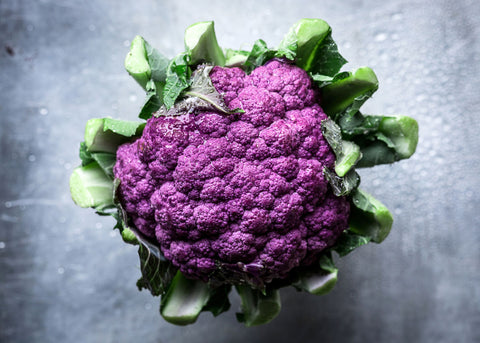
Varieties may form white, purple, orange, or green heads, including pointed Romanesco types. Cauliflower is a cool-season biennial grown as an annual, and it rewards steady growth, even moisture, and mild weather more than almost any other garden vegetable.
Cauliflower Growing Guide
Timing
Start seeds indoors about 4–6 weeks before transplanting. Set hardened spring plants outdoors about 2–4 weeks before the expected last frost.
Cauliflower forms its best heads in cool, settled weather. Sustained heat, severe cold, or interrupted growth can lead to small or poorly formed heads. For fall harvest, count backward from the variety’s days to maturity and allow extra time as autumn growth slows.
Sowing & Starting
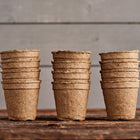
Sow seeds about ¼–½ inch deep in moist seed-starting mix. Provide bright light and cool, steady growing conditions after emergence.
Harden seedlings gradually before transplanting and space them about 18–24 inches apart. Use young, actively growing plants rather than seedlings that have become root-bound or stressed, since cauliflower is sensitive to setbacks early in life.
Growing & Care
Choose a site with full sun and fertile, well-drained soil enriched with finished compost. Keep growth steady with balanced fertility, but avoid excess nitrogen that produces abundant leaves without a well-developed head.
Maintain even soil moisture throughout the season and mulch once plants are established. White-headed varieties may need their outer leaves loosely folded or tied over the developing head to protect its color, while many newer varieties naturally curl their leaves inward.
Harvesting
Harvest when the head is full, firm, and tightly packed, before the surface begins to loosen or separate. Mature size varies greatly by variety, so firmness and density are better guides than diameter alone.
Cut the head with several surrounding leaves attached to protect it after harvest. Cauliflower does not usually produce useful side shoots after the main head is removed.
Nutrition & Uses
Cauliflower provides fiber, folate, vitamin C, vitamin K, potassium, and naturally occurring glucosinolates. Purple varieties also contain anthocyanins, while orange types contain more carotenoid pigments.
Use the heads raw, roasted, steamed, grilled, pickled, or added to soups, curries, casseroles, and grain dishes. The tender leaves and peeled stems are edible as well and can be cooked much like other brassica greens.
Pests & Diseases
Cabbageworms, loopers, and other caterpillars may chew leaves or hide near the developing head. Inspect plants regularly, remove eggs and caterpillars by hand, and use insect netting from transplanting onward where these pests are common.
Flea beetles, aphids, slugs, and cutworms may also damage plants. Crop rotation, good airflow, clean beds, soil-level watering, and nearby flowering plants that support beneficial insects help reduce problems. Remove plants showing severe yellowing or V-shaped leaf lesions, which may indicate black rot.
Seed Saving
Cauliflower is an insect-pollinated biennial and crosses with other Brassica oleracea crops, including broccoli, cabbage, kale, collards, Brussels sprouts, and kohlrabi.
Save seed from several healthy, true-to-type, open-pollinated plants. Grow only one flowering B. oleracea variety nearby or provide generous isolation. Selected plants must survive winter and flower during their second season.
Allow the seedpods to turn tan and begin drying, then cut the stalks before the pods shatter. Finish drying under cover, thresh, clean, and store the fully dry seed in a cool, dark place.
Extra Tips
Fall crops are often easier to mature than spring crops.
Keep young plants growing without interruption.
Protect developing white heads from strong sunlight.
Harvest promptly once the head begins to loosen.
Rotate cauliflower with crops outside the brassica family.