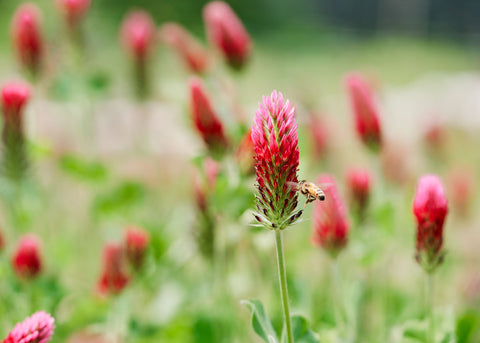
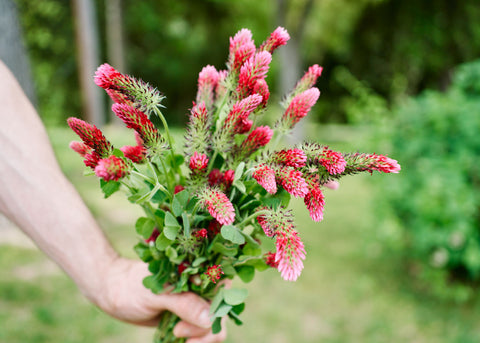
Clover has been valued for centuries as one of the most useful plants a gardener or farmer can grow. Long appreciated for enriching soil, reducing erosion, feeding pollinators, and providing forage for livestock, it remains one of the most dependable cover crops for home gardens, orchards, and small farms.
Beyond its agricultural value, clover produces masses of nectar-rich blossoms that attract bees and other beneficial insects throughout the growing season. The flowers have a long history of use in traditional herbal preparations, while fresh and dried stems also add a natural, meadow-like texture to bouquets and floral arrangements.
Clover Growing Guide
Timing
Sow clover in early spring once the soil can be worked, or in late summer through early fall while soil temperatures remain warm enough for establishment before winter. Cool, moist conditions encourage the most reliable germination.
Clover can also be frost-seeded in late winter in many regions, allowing freezing and thawing soils to work seed naturally into the ground.
Sowing & Starting
Broadcast seed evenly over prepared soil and lightly rake or roll it so the seed makes good soil contact. Clover seed should be covered only lightly—about ⅛ inch or less—as deeper planting can reduce germination.
Keep the soil consistently moist until seedlings establish. Dense sowings create the quickest living mulch or cover crop, while lighter rates work well between vegetable rows, orchards, or perennial plantings.
Growing & Care
Plant clover in full sun to partial shade in reasonably well-drained soil. Once established, it requires little maintenance and tolerates regular mowing, foot traffic, and repeated regrowth depending on the species.
As a legume, clover forms a partnership with beneficial soil bacteria that capture atmospheric nitrogen, gradually improving soil fertility for future crops. Its dense growth also suppresses weeds, protects bare ground from erosion, improves soil structure, and provides valuable forage for bees and other pollinating insects.
Clover works exceptionally well beneath fruit trees, around garden paths, between vegetable beds, and anywhere living ground cover is preferred over bare soil.
Harvesting
When grown as a cover crop, mow or terminate clover before heavy seed production if you wish to prevent volunteer seedlings. Allow the cut foliage to decompose on the soil surface or incorporate it before planting the next crop.
Flowers may also be harvested as they fully open for drying, herbal use, or fresh arrangements. Cut stems during dry weather after the morning dew has evaporated for the best quality.
Nutrition & Uses
Clover is grown primarily to build healthy soil, support pollinators, and provide forage. Its flowers are especially valuable to honeybees and many native pollinating insects throughout the growing season.
Red clover blossoms have a long tradition of use in herbal teas and preparations, while both red and white clover add a soft, natural texture to fresh bouquets, meadow-style arrangements, and dried floral work.
Pests & Diseases
Clover experiences relatively few serious pest or disease problems. Aphids, leafhoppers, or occasional fungal leaf spots may appear but rarely threaten healthy plantings.
Avoid prolonged standing water and extremely compacted soils. Rotating cover crops and maintaining good drainage help promote vigorous growth year after year.
Seed Saving
Clover is insect-pollinated, primarily by bees, and different varieties may cross when flowering together. If saving seed, grow one variety or provide adequate isolation to maintain varietal purity.
Allow flower heads to mature and dry completely on the plant until they turn brown. Harvest before the heads begin shattering, then dry thoroughly and gently thresh to release the small seeds. Screen or winnow away the chaff before storing seed in a cool, dark, dry location.
Extra Tips
Inoculating seed with the proper rhizobium bacteria can improve nitrogen fixation where clover has not been grown recently.
Mow periodically to encourage dense regrowth when used as a living ground cover.
Leave flowers blooming whenever possible to support pollinators.
Makes an excellent companion beneath fruit trees and around vegetable gardens.
Rotate cover crops periodically to maintain healthy soil.