
How to Grow Daisies

Daisies have brightened gardens for generations with their clean white petals and sunny golden centers. While the name “daisy” refers to many different flowers, this guide focuses on Shasta daisy (Leucanthemum × superbum), one of the most beloved perennial garden daisies.

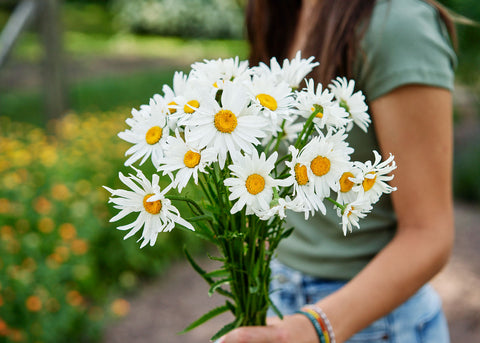
Shasta daisies produce sturdy stems topped with large blooms from early summer into midsummer, making them equally at home in perennial borders, cottage gardens, pollinator plantings, and cutting gardens. Their long-lasting flowers attract bees and butterflies while bringing a timeless look to fresh bouquets.

Growing Guide

Start Shasta daisies indoors 6–8 weeks before the last expected spring frost, or sow outdoors after the danger of hard frost has passed. Seeds may also be sown in late summer or early fall, allowing plants to establish before winter.

Young plants often develop into leafy rosettes during their first season before producing heavier bloom displays in the following years.

Sow seeds on the surface or cover them with no more than ⅛ inch of soil, as light helps encourage germination. Keep the soil evenly moist until seedlings emerge, usually within two to three weeks.

Provide bright light and good airflow as seedlings grow. Harden plants before transplanting and space them about 18–24 inches apart to allow mature clumps to develop with good air circulation.

Grow Shasta daisies in full sun and well-drained soil. They appreciate consistent moisture while becoming established but become fairly drought tolerant once mature.

Remove spent flowers to encourage continued blooming and divide established clumps every few years if flowering begins to decline or the center of the plant becomes sparse.

Shasta daisies make excellent companion plants in pollinator gardens, attracting bees, butterflies, hoverflies, and other beneficial insects. Their upright white blooms also pair beautifully with coneflowers, rudbeckia, yarrow, salvia, and ornamental grasses.

Cut flowers when they are fully open and the centers remain bright and firm. Harvest during the cool morning hours and place stems immediately into clean water.

Frequent cutting and deadheading encourage additional flowering while extending the bloom season in the garden.

Shasta daisies are grown primarily as ornamental perennials for landscape beauty, pollinator support, and cut flower production.

Their crisp white flowers bring brightness to cottage gardens, perennial borders, and meadow-style plantings. Long, sturdy stems make them excellent focal flowers in fresh bouquets and wedding arrangements.

Shasta daisies are generally dependable but may occasionally experience aphids, leaf miners, slugs, or earwigs. Powdery mildew and leaf spot can develop where plants become crowded or remain damp for extended periods.

Provide good spacing, water near the soil, and remove old foliage after frost to encourage healthy plants year after year.

Shasta daisies are insect-pollinated and may cross with nearby Shasta daisy varieties, though they generally do not cross with unrelated daisy species. If preserving a particular cultivar, grow one variety for seed or provide adequate isolation.

Allow flower heads to remain on the plant until the petals have dried and the seed head turns brown. Once fully dry, cut the heads and rub them gently between your fingers to release the small, flattened seeds from the center. Separate the light chaff and store clean, dry seed in a labeled container in a cool, dark location.

  • Give plants full sun for the strongest stems and heaviest bloom.
  • Deadhead regularly to encourage additional flowers.
  • Divide mature clumps every few years to maintain vigor.
  • Excellent for cutting gardens and pollinator borders.
  • Leave a few flowers standing if you’d like to collect seed.