How to Grow Flax

Flax has been cultivated for thousands of years, prized throughout history for producing linen fiber, nutritious seed, and beautiful flowers. While the flax grown for textiles and flaxseed is common flax (Linum usitatissimum), ornamental species offer their own unique beauty, bringing fine texture and delicate blooms to gardens and meadows.

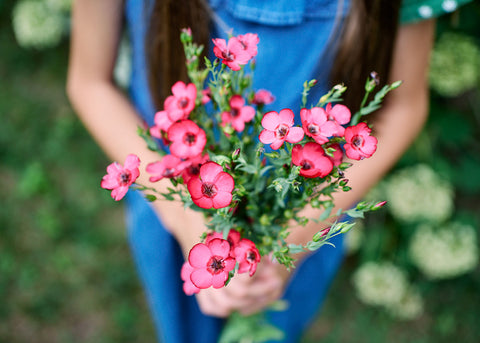
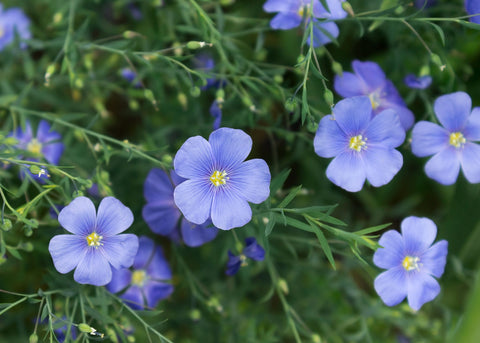
Scarlet flax (Linum grandiflorum) produces brilliant scarlet-red flowers on graceful branching stems, while blue flax (Linum lewisii) is a North American native wildflower with soft blue blooms that return year after year under favorable conditions. Both attract pollinators, blend naturally into meadow plantings, and add an airy elegance to cutting gardens and cottage borders.

Growing Guide

Direct sow scarlet flax after the danger of hard frost has passed and the soil can be worked. It grows quickly in mild spring weather and may be sown again several weeks later for a longer season of color.

Blue flax can be direct sown in early spring or late fall. Fall sowing exposes seed to natural winter conditions and can encourage earlier spring growth. Established blue flax begins growing early and commonly flowers from late spring into summer. 

Sow flax about ⅛–¼ inch deep in prepared garden soil. Keep the seedbed evenly moist until germination, which usually occurs within one to three weeks depending on soil temperature.

Flax develops slender roots and generally performs best when direct sown rather than transplanted. Thin plants to roughly 6–10 inches apart, allowing their branching stems to fill the space without becoming crowded.

For a softer meadow effect, seed can be scattered more informally and thinned only where growth becomes overly dense.

Choose a site with full sun and well-drained soil. Flax performs best in average to moderately lean soils and rarely benefits from heavy fertilization, which can encourage weak, floppy stems instead of abundant flowers.

Water regularly while seedlings establish. Once rooted, blue flax is especially drought tolerant, while scarlet flax benefits from occasional watering during extended dry periods. Avoid poorly drained or waterlogged soil, particularly with perennial blue flax.

Flax makes an excellent companion plant in pollinator gardens, attracting native bees, honeybees, butterflies, and other beneficial insects. Its upright, airy stems also weave naturally among coneflowers, coreopsis, yarrow, and ornamental grasses without competing for space, making it an excellent choice for meadow plantings and mixed borders.

Choose a site with full sun and well-drained soil. Flax performs best in average to moderately lean soils and rarely benefits from heavy fertilization, which can encourage weak, floppy stems instead of abundant flowers.

Water regularly while seedlings establish. Once rooted, blue flax is especially drought tolerant, while scarlet flax benefits from occasional watering during extended dry periods. Avoid poorly drained or waterlogged soil, particularly with perennial blue flax.

Flax makes an excellent companion plant in pollinator gardens, attracting native bees, honeybees, butterflies, and other beneficial insects. Its upright, airy stems also weave naturally among coneflowers, coreopsis, yarrow, and ornamental grasses without competing for space, making it an excellent choice for meadow plantings and mixed borders.

Scarlet and blue flax are grown primarily for their ornamental beauty, pollinator value, and natural meadow appearance. Scarlet flax provides brilliant summer color, while blue flax offers soft blue blooms that blend beautifully into prairie plantings, cottage gardens, and naturalized landscapes.

Although they belong to the same genus as common flax, these ornamental species are not the flax traditionally grown for linen fiber or flaxseed. Those products come from common flax (Linum usitatissimum), a different species cultivated specifically for textiles, food, and oil.

Flax is generally a dependable, low-maintenance plant with few serious pest problems. Aphids, flea beetles, or caterpillars may occasionally feed on young plants, but healthy flax usually outgrows minor damage.

Good spacing, full sun, and well-drained soil help prevent fungal diseases and root problems. Avoid planting in areas that remain consistently wet, especially when growing perennial blue flax.

Flax forms small, rounded seed capsules after flowering. Allow the capsules to mature on the plant until they turn tan to light brown and begin to dry, but harvest before they split open and scatter their seed.

Scarlet flax and blue flax are different species and will not cross with one another, but varieties within the same species may cross if grown nearby. Cut mature stems, finish drying them under cover if needed, then gently crush the capsules to release the smooth, flattened seeds. Screen away the broken capsule pieces and store clean, dry seed in a cool, dark location.

  • Direct sow for the strongest plants.
  • Avoid overly rich soil, which can produce weak stems.
  • Blue flax returns for many years in well-drained locations.
  • Scarlet flax can be succession sown for a longer bloom season.
  • Leave a few seed capsules if natural reseeding is desired.