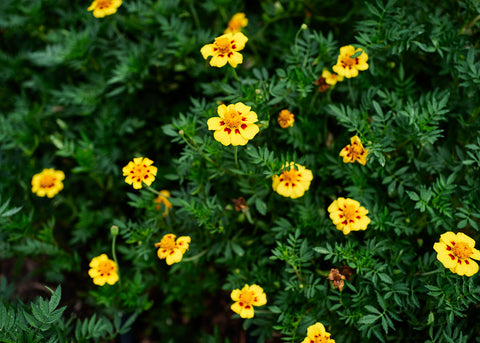
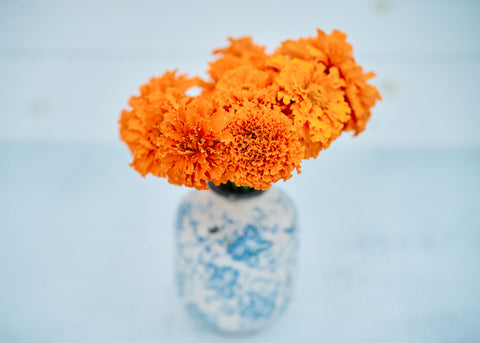
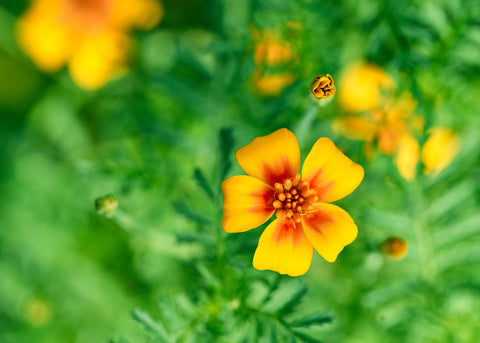
Marigolds have filled kitchen gardens, flower beds, and ceremonial plantings with warm color for centuries. Native to Mexico and Central America, these sun-loving annuals bloom in shades of gold, yellow, orange, copper, red, cream, and mahogany, carrying the garden through summer and often continuing until frost.
French marigolds (Tagetes patula) form compact, branching plants; African marigolds (Tagetes erecta) produce taller stems and larger, rounded flowers; and signet marigolds (Tagetes tenuifolia) grow into fine-leaved mounds covered with small, open blooms. Together, they offer flowers for borders, containers, vegetable gardens, pollinator plantings, bouquets, and—among culinary signet varieties—colorful edible petals.
Marigold Growing Guide
Timing
Start marigolds indoors about 4–6 weeks before the expected last spring frost, or direct sow after frost danger has passed and the soil has warmed. They grow quickly in warm conditions and should not be planted into cold, wet ground.
French marigolds can also be sown in early to midsummer for fresh late-season flowers. In climates with long autumns, this later planting can continue blooming until frost, though taller African types generally benefit from an earlier start.
Sowing & Starting
Sow seeds about ¼ inch deep in moist seed-starting mix or prepared garden soil. Keep evenly moist until germination, which usually occurs within one to two weeks in warm conditions.
Provide strong light after seedlings emerge and harden indoor-grown plants gradually before transplanting. Space compact French and signet types about 6–10 inches apart; larger African marigolds generally need at least 12 inches, with additional room for especially tall varieties.
Growing & Care
Choose a site with full sun and well-drained soil. Marigolds tolerate summer heat and ordinary garden ground, but prolonged wetness can weaken the roots. Excess fertility often produces leafy plants with fewer flowers.
Water regularly while plants establish, then during extended dry periods. Pinch branching varieties when young for fuller growth, and remove faded flowers to direct energy toward continued bloom rather than seed production.
Marigolds are commonly planted near vegetables because their aromatic foliage may make the area less appealing to deer and rabbits, although they should not be treated as a guaranteed pest barrier. Open-centered flowers also attract bees, hoverflies, and other beneficial insects, adding color and diversity around vegetable beds.
Harvesting
For fresh arrangements, cut marigolds when the flowers are partly to fully open and still firm. Harvest in the cool part of the day, remove foliage that would sit below the waterline, and place the stems promptly into clean water. Seed Savers Exchange recommends harvesting fresh marigold flowers when heads are about half open.
African marigolds provide bold focal flowers, while smaller French and signet types work well in mixed garden bouquets, posies, garlands, and table arrangements. Regular cutting encourages continued flower production.
Nutrition & Uses
Marigolds are valued for long-lasting garden color, pollinator activity, companion planting, and fresh floral work. Their warm shades blend naturally with zinnias, celosia, cosmos, sunflowers, amaranth, and late-summer grasses.
The flowers of culinary signet marigolds are edible and may be used sparingly in salads, garnishes, herb butters, and desserts. Do not assume every ornamental marigold has been grown or selected for eating; use only varieties identified for culinary use and grown without unsuitable garden treatments.
Pests & Diseases
Marigolds are generally dependable, though aphids, spider mites, whiteflies, slugs, Japanese beetles, or caterpillars may occasionally feed on them. Inspect young plants regularly and remove heavily damaged flowers or foliage when needed.
Good spacing, full sun, clean beds, and watering near the soil help reduce leaf spots, flower rot, and root problems. Deadheading is especially useful in humid weather because spent flowers can hold moisture and decay.
Seed Saving
Marigolds can self-pollinate, but insects also move pollen between plants, so varieties growing together may cross.
Leave selected flower heads on healthy plants until they are completely brown, dry, and papery. Pull the dried head apart to reveal the long, slender seeds—dark at one end with a pale, brush-like tip. Separate them from the dried petals and base, then store fully dry seed in a labeled container in a cool, dark place.
Extra Tips
Wait for warm soil before direct sowing.
Pinch branching plants for fuller growth.
Deadhead regularly for continued bloom.
Use signet marigolds for compact plantings and edible flowers.
Leave several strong flower heads untouched when saving seed.