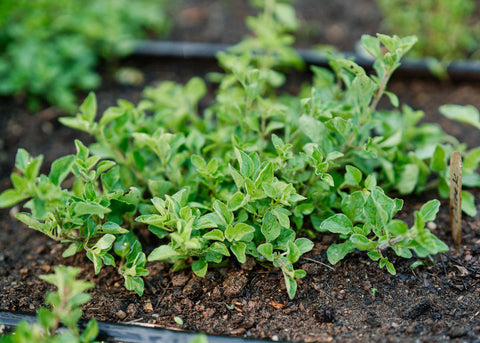
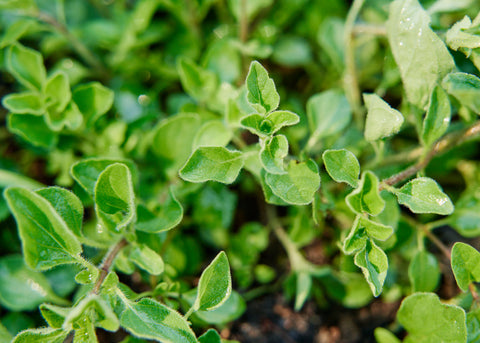
Oregano has been grown around the Mediterranean for centuries, valued for its warm, savory fragrance and its place in sauces, roasted vegetables, breads, meats, cheeses, and herb blends. Its flavor deepens in sun and dry weather, carrying the character of rocky hillsides and kitchen gardens into everyday cooking.
In the garden, oregano forms a low, spreading perennial mound with small leaves and clusters of pale flowers. It fits easily into herb beds, containers, borders, and pollinator plantings, where the blooms draw bees and beneficial insects through summer.
Oregano Growing Guide
Timing
Start oregano indoors about 8–10 weeks before the expected last spring frost, or direct sow after the soil has warmed.
Transplant after severe frost has passed and plants are well rooted. Established oregano is perennial where winter conditions suit it.
Sowing & Starting
Sow the tiny seeds on the surface of moist seed-starting mix and cover only barely. Keep evenly moist until germination, which may take one to three weeks.
Provide bright light and good airflow. Transplant after hardening, spacing plants about 12–18 inches apart.
Growing & Care
Choose full sun and well-drained soil. Oregano grows best in moderate to lean conditions and often develops stronger flavor without heavy feeding.
Water regularly while plants establish, then allow the soil surface to dry slightly between waterings. Trim after flowering to keep plants compact and encourage fresh leaves.
Oregano flowers attract bees, hoverflies, and parasitic wasps, making the herb useful along vegetable-bed edges and in mixed pollinator plantings.
Harvesting
Begin cutting once plants are established. Harvest stems just above a leaf pair, preferably before or as flowers begin to open.
Use fresh or dry small bundles in a shaded, airy place. Dried oregano often develops a stronger flavor than fresh leaves.
Nutrition & Uses
Oregano contains aromatic essential oils and plant compounds that give it its familiar savory flavor.
Use it in tomato sauce, pizza, roasted vegetables, beans, meats, breads, vinaigrettes, marinades, cheeses, and Mediterranean herb blends.
Pests & Diseases
Oregano is generally resilient. Aphids, spider mites, or small chewing insects may occasionally appear.
Good drainage and airflow help prevent root problems, mildew, and leaf spots. Avoid keeping plants constantly wet.
Seed Saving
Oregano is insect-pollinated and varieties may cross when flowering nearby. Grow one variety for seed or provide isolation.
Allow flower clusters to dry fully, cut them before heavy shattering, finish drying under cover, then rub or thresh to release the tiny seed. Store fully dry seed in a cool, dark place.