Peas are among the world’s oldest cultivated food crops, with archaeological evidence reaching back thousands of years to the Near East. Their early role as a dependable dried food crop eventually expanded into the tender shelling, snow, and sugar snap peas grown in gardens today.
Shelling peas are grown for the tender seeds inside, snow peas are gathered while the pods remain flat, and sugar snap peas are picked once the pods become plump, crisp, and sweet. Direct sow into cool, workable soil, provide support early, and harvest regularly before summer heat slows flowering.
Pea Growing Guide
Timing
Direct sow peas in early spring as soon as the soil can be worked. Young plants tolerate light frost, and peas grow best while temperatures remain cool.
For a longer harvest, make two or three small sowings about one week apart. Peas may also be planted in late summer for a fall crop where the season is long enough for them to mature before hard freezes.
Sowing & Starting
Sow peas directly in the garden about 1 inch deep and 1–3 inches apart, with rows spaced 18–24 inches apart. Plant into moist, well-drained soil rather than cold, waterlogged ground, where seeds are more likely to rot.
Install a trellis or other support before sowing tall or vining varieties so young roots are not disturbed later. Dwarf varieties generally do not require a trellis, though light support can help keep plants upright and make harvesting easier.
Growing & Care
Grow peas in full sun and well-drained soil. Compost can be added before planting, while heavy applications of nitrogen fertilizer may encourage leafy growth at the expense of flowers and pods.
Water during dry periods and use shallow cultivation or mulch to control weeds and conserve moisture. Pea roots grow close to the soil surface, so work carefully around the plants.
Harvesting
Check vines frequently once pods begin to mature, since peas can become starchy within only a few days.
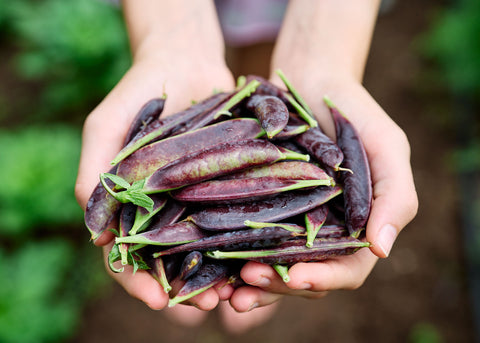
Shelling peas: Pick when pods are rounded and filled, while the peas remain tender.
Snow peas: Pick when pods are full length but still flat.
Sugar snap peas: Pick when pods are plump, crisp, and nearly filled.
Hold the vine with one hand while removing pods with the other, and cool the harvest promptly to preserve sweetness.
Nutrition & Uses
Peas offer plant protein, fiber, complex carbohydrates, folate, vitamin C, vitamin K, and several minerals. They also contain polyphenols, flavonoids, carotenoids, and other antioxidant compounds, giving this small garden crop more substance than many tender vegetables.
Shelling peas are best eaten soon after harvest, before their sugars begin changing to starch. Steam, freeze, or add them to soups, pastas, and grain dishes. Snow and snap peas are enjoyed pod and all in salads, stir-fries, and fresh garden snacks.
Pests & Diseases
Watch for aphids on curled, sticky, or discolored foliage. Beneficial insects such as lady beetles, lacewings, and hoverfly larvae often help keep populations in check.
Powdery mildew may appear later in the season as white growth on leaves and pods. Planting early, allowing good airflow, watering at soil level, rotating crops, and choosing resistant varieties can help reduce disease problems. Well-drained soil also lowers the risk of seed decay and root rot.
Seed Saving
Save seed from healthy, open-pollinated plants that show the expected traits of the variety. Leave selected pods on the vines until they become dry and brown and the peas inside are fully hard.
If wet weather threatens, gather the pods and finish drying them in a protected, well-ventilated place. Shell only when completely dry, then store the seed in a labeled, airtight container in a cool, dark, dry location.
Extra Tips
Install trellising before seedlings emerge.
Sow small batches about one week apart to spread the harvest.
Pick during the cooler part of the day and refrigerate promptly.
Remove diseased vines after the final harvest.
Healthy pea vines can be composted once the crop is finished.