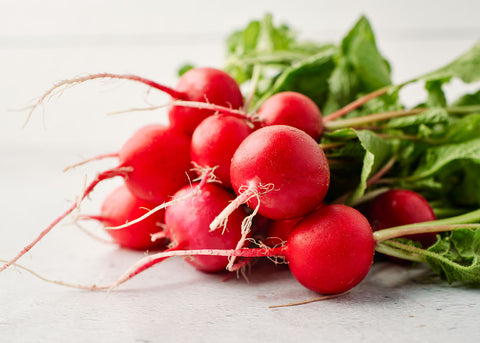
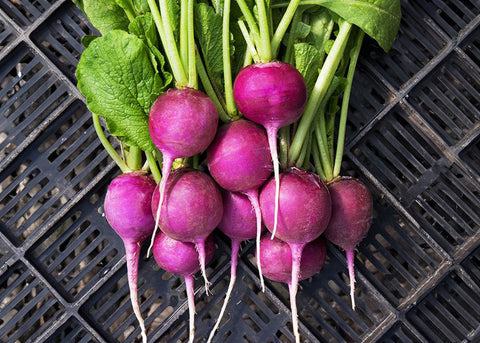
Radishes have been cultivated for thousands of years, likely first in Asia before spreading through the Mediterranean, Europe, and beyond. Over time, growers developed small spring radishes, larger winter types, long daikons, leafy forms, and varieties grown for their edible seed pods.
Radishes are quick-growing, cool-season roots that fit easily into beds, containers, and spaces between slower crops. Direct sow into loose soil, thin promptly, and keep moisture steady. Spring radishes may be ready within a month, while larger winter and daikon types need more time and room.
Radish Growing Guide
Timing
Sow spring radishes several weeks before the average last frost, once the soil can be worked. Seeds germinate readily in soil around 40°F and emerge faster as it warms.
Make small sowings every 1–2 weeks while weather remains cool. Pause when sustained heat arrives, then resume in late summer for a fall crop.
Winter radishes and most daikons need a longer season. Sow them early enough to mature during cool fall weather, using the variety’s days to maturity and your first expected frost as guides.
Sowing & Starting
Direct sow seeds ¼–½ inch deep. Space small spring radishes about 1–2 inches apart and larger winter or daikon types 4–6 inches apart, following the packet for unusually large varieties.
Radishes do not need to be started indoors. Their quick growth and developing taproots make direct sowing the better choice.
Keep the seedbed moist until seedlings emerge, usually within 3–10 days. Thin early because crowded plants often produce leafy tops and undersized roots.
Growing & Care
Grow radishes in full sun during cool weather. Light afternoon shade can help as temperatures rise. Use loose, well-drained soil so roots can expand without obstruction.
Provide frequent, even moisture. Dry soil and interrupted growth can make roots woody, pithy, cracked, or strongly flavored.
Radishes need only moderate fertility. Excess nitrogen encourages leaves instead of roots. Weed carefully so nearby plants do not compete with the shallow roots.
Harvesting
Harvest spring radishes once the roots reach the expected size, often about 1 inch across. Check them frequently because the best harvest window may last only a few days in warm weather.
Winter radishes and daikons can remain in the ground longer and often develop better flavor in cool conditions. Harvest before the soil freezes or the roots become oversized and pithy.
Pull the entire plant, remove the tops, and refrigerate the roots promptly. Leaving the greens attached draws moisture from the root and shortens storage life.
Nutrition & Uses
Radishes provide vitamin C, folate, potassium, fiber, and antioxidant plant compounds, including flavonoids. Red and purple varieties may contain anthocyanins, while their characteristic bite comes from sulfur-containing compounds common to the cabbage family.
Enjoy the roots raw, roasted, sautéed, pickled, or fermented. Tender leaves can be cooked as greens or blended into soups and sauces, while some varieties produce crisp, peppery seed pods.
Pests & Diseases
Flea beetles may pepper the leaves with small holes, especially while plants are young. Floating row cover placed immediately after sowing offers good protection.
Cabbage root maggots can tunnel into roots. Crop rotation, prompt removal of old plants, and insect-proof row cover help reduce damage.
Clubroot, downy mildew, and leaf diseases may occur in wet or repeatedly planted beds. Rotate radishes and other cabbage-family crops, improve drainage, and avoid crowding.
Seed Saving
Radishes are insect-pollinated and cross readily with other radish varieties flowering nearby. Grow one variety or isolate selected plants when saving seed true to type.
Allow healthy plants to bolt and form branching flower stalks. Spring varieties may produce seed in the same season, while some winter types benefit from cold exposure before flowering.
Let the seed pods turn tan and dry on the plant. Gather them before they split, dry them further under cover, then crush the brittle pods and separate the seed from the chaff.
Extra Tips
* Sow small amounts every week or two for a steady harvest.
* Thin seedlings early so each root has room to develop.
* Keep soil evenly moist to reduce pithiness and excess heat.
* Interplant quick spring radishes between slower vegetables.
* Harvest promptly once roots reach their expected size.