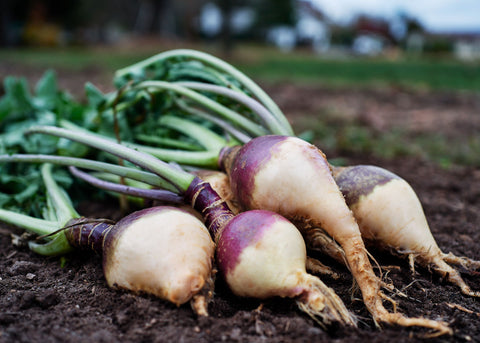
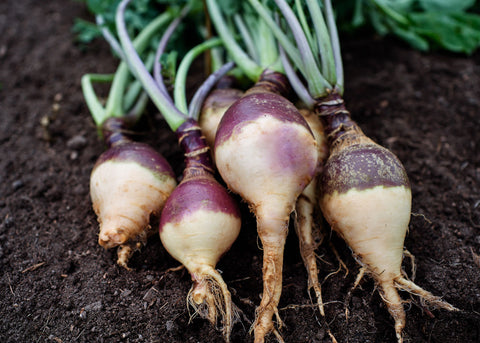
Rutabagas are a patient garden crop, swelling slowly beneath the soil as summer gives way to cooler days. Their golden flesh and purple-brushed shoulders have long earned a place in northern kitchens, where they were valued as dependable roots for roasting, mashing, and winter storage.
Sometimes called Swedish turnips or swedes, rutabagas are larger, denser, and slower-growing than ordinary turnips. They are cool-season biennials usually grown as annuals, producing their sweetest, smoothest roots when growth is steady and the crop matures in cool autumn weather.
Rutabaga Growing Guide
Timing
Direct sow rutabagas so the roots mature during cool weather. In many climates, this means sowing in early to midsummer for harvest after the first light frosts.
Allow about 90–110 days before the first hard freeze, depending on the variety. Rutabagas tolerate frost well, and cool autumn temperatures often improve their sweetness and texture.
Sowing & Starting
Sow seeds about ½ inch deep and 1 inch apart in loose, well-prepared soil. Keep the seedbed evenly moist until seedlings emerge.
Thin plants to about 4–6 inches apart once they are established. Rutabagas are best direct sown because transplanting may disturb the developing root. Young thinnings may be used as tender greens.
Growing & Care
Choose a site with full sun and deep, well-drained soil free of stones and hard clods. Finished compost can improve soil structure and help roots develop evenly.
Keep moisture steady throughout the long growing season. Dry spells may produce woody or strongly flavored roots. Mulch lightly once plants are established to conserve moisture, cool the soil, and reduce weed competition.
Harvesting
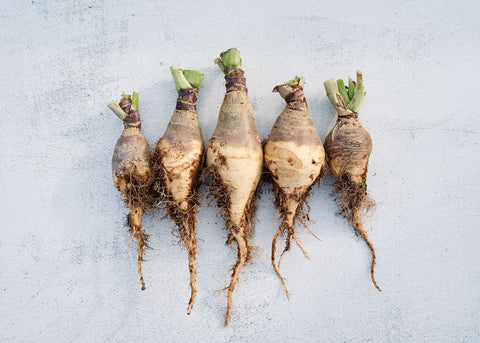
Harvest when roots reach about 3–5 inches across and feel firm and heavy. Smaller roots are often more tender, though many varieties remain useful at larger sizes.
Light frost can improve flavor, but harvest before the soil freezes hard. Cut off the tops, brush away loose soil, and store sound roots in cool, humid conditions. Rutabagas keep well when protected from drying out.
Nutrition & Uses
Rutabagas provide fiber, vitamin C, potassium, and naturally occurring glucosinolates. Their golden flesh also contains carotenoid pigments.
Use them roasted, mashed, steamed, added to soups and stews, or grated raw into slaws. Their flavor is sweeter and less sharp than many turnips, especially after exposure to cool weather.
Pests & Diseases
Flea beetles may damage young leaves, while cabbageworms, aphids, and slugs may also feed on the tops. Inspect plants regularly, remove pests by hand where practical, and use insect netting early where pest pressure is heavy.
Root maggots can tunnel into developing roots. Rotate rutabagas and other brassicas, remove damaged roots promptly, and avoid planting related crops in the same ground year after year. Good drainage and soil-level watering help reduce root and leaf diseases.
Seed Saving
Rutabagas are insect-pollinated biennials and usually flower after winter cold. They belong to Brassica napus and may cross with other flowering crops of the same species.
Save seed from several healthy, true-to-type, open-pollinated roots. Overwinter selected plants in the garden where conditions permit, or lift and store them in cool, humid conditions before replanting in spring.
Allow the second-year seedpods to turn tan and begin drying, then cut the stalks before they shatter. Finish drying under cover, thresh, clean, and store the fully dry seed in a cool, dark place.
Extra Tips
Plan for an autumn harvest rather than midsummer.
Thin promptly so roots have room to enlarge.
Keep moisture steady during root development.
Let mature roots experience light frost for sweeter flavor.