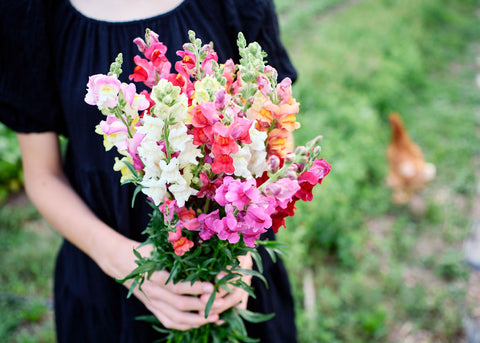
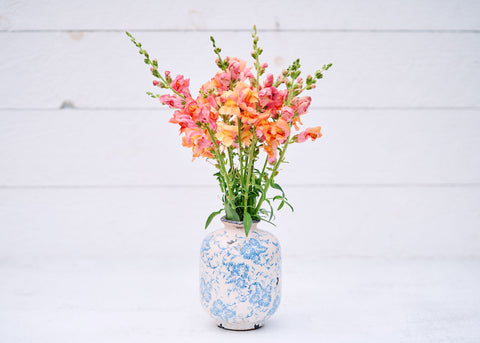
Snapdragons have been grown in cottage gardens and cutting rows for generations, loved for tall flower spikes lined with blooms that open like tiny hinged mouths when gently pressed. Their colors range from white and soft pastels to yellow, orange, rose, crimson, and deep burgundy, bringing height and structure to the garden.
These cool-weather flowers are especially valuable for bouquets, where their upright stems balance rounded blooms and airy fillers. Depending on variety and climate, snapdragons may be grown as annuals, short-lived perennials, or fall-planted flowers that overwinter and return with early spring growth.
Snapdragon Growing Guide
Timing
Start snapdragons indoors about 8–10 weeks before the expected last spring frost. They tolerate cool conditions once established and can be transplanted outdoors before heat-loving annuals, after seedlings have been hardened gradually.
In regions with mild winters, snapdragons may also be started in late summer and planted in fall for overwintering and earlier spring flowers. Where winters are severe, begin indoors in late winter for spring planting. A later summer sowing can provide fall flowers where cool weather arrives gradually.
Sowing & Starting
Snapdragon seed is extremely small and needs light for germination. Sow it on the surface of moist seed-starting mix, press gently into place, and do not cover deeply. Keep the surface evenly moist until seedlings emerge.
Provide bright light and good airflow immediately after germination. Transplant seedlings into larger cells once true leaves appear, then harden them before planting outdoors. Direct sowing is possible but less dependable than transplanting because the seedlings are tiny and slow to establish.
Growing & Care
Choose a site with full sun and fertile, well-drained soil. Snapdragons grow best in cool to mild weather with steady moisture, though established plants should not remain waterlogged.
For branching plants with several flowering stems, pinch seedlings when they are about 3–4 inches tall and have several true leaves. Pinching delays flowering slightly but encourages side shoots. Plants grown for one tall central stem are usually left unpinched and planted more closely.
Tall varieties benefit from horizontal netting or another light support to keep stems straight. Snapdragon flowers attract bees, butterflies, and other pollinators, making them useful near vegetable beds, cutting rows, and mixed flower borders.
Harvesting
Cut snapdragons when the lowest two or three flowers on the spike have opened. The buds above them continue opening in the vase, while stems harvested too late may drop their lowest flowers quickly.
Harvest during the cool part of the day and place stems promptly into clean water. Remove foliage that would sit below the waterline. Regular cutting and deadheading encourage additional stems, particularly on branching varieties.
Nutrition & Uses
Snapdragons are valued for their tall flower spikes, broad color range, and usefulness in borders, containers, pollinator gardens, and fresh arrangements. Their upright shape adds structure among softer flowers such as cosmos, nigella, bachelor’s buttons, and feverfew.
Use snapdragons as focal or line flowers in bouquets, where the lower blossoms provide color while unopened buds carry the eye upward. Compact varieties suit containers and garden edges, while taller forms are especially useful in dedicated cutting rows.
Pests & Diseases
Aphids, spider mites, thrips, caterpillars, and slugs may occasionally feed on snapdragons. Inspect young growth and flower spikes regularly, especially where plants are crowded.
Rust, leaf spots, gray mold, and root problems are more likely where foliage remains wet or airflow is poor. Space plants appropriately, water near the soil, and remove badly affected leaves or declining plants. Gray mold is especially favored by cool, damp conditions, while snapdragon rust may also develop during cool weather.
Seed Saving
Snapdragons are mostly self-pollinating, though bees may occasionally transfer pollen between nearby varieties. To maintain a variety as true to type, separate different snapdragon varieties by approximately 600 feet when practical.
After flowering, the blooms develop into small capsules filled with hundreds of tiny seeds. Allow most of the capsules on the flower spike to turn brown and dry before harvesting. Cut the stalk before the capsules begin opening, then finish drying it indoors if needed. Once fully dry, gently shake or crush the capsules over a tray or sheet of paper to release the fine seeds. Screen away the larger capsule pieces and store the clean, dry seed in a labeled container in a cool, dark place.
Extra Tips
Surface sow the tiny seeds; light supports germination.
Pinch young plants when several branching stems are desired.
Leave plants unpinched for one taller central flower spike.
Install support before stems begin stretching rapidly.
Plant in fall where winters are mild for earlier spring flowers.