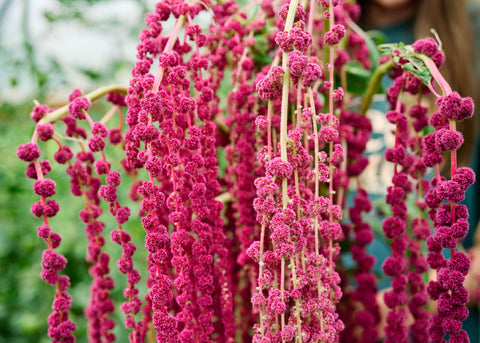
Amaranth has been grown in the Americas for thousands of years, valued for its edible leaves, nutritious grain, and tall flower heads filled with seed. Some varieties are grown mainly as vegetables or grain crops, while others are prized for their rich color, sweeping form, and usefulness in fresh or dried flower arrangements.
It is a warm-season plant that grows quickly once the soil heats up. Amaranth prefers full sun, moderate fertility, and enough room to reach its natural size. Depending on the variety, harvest may begin with tender leaves early in the season, continue with stems for cutting, and finish with mature seed heads in late summer or fall.
Growing Guide
Timing
Sow amaranth after the danger of frost has passed and the soil has warmed. Seedlings are sensitive to cold, and growth is slow in cool conditions.
In short-season areas, start seed indoors about 4–6 weeks before the expected last frost. Transplant only after nights are reliably mild. For a steady harvest of young leaves, sow small batches every few weeks during warm weather.
Sowing & Starting
Amaranth seed is very small. Sow it shallowly, about ⅛ inch deep, and keep the soil evenly moist until seedlings emerge. When direct sowing, mix the seed with fine sand to help spread it more evenly.
Thin young plants according to their purpose. Leaf types can be spaced about 6–12 inches apart for repeated harvests. Tall grain or ornamental varieties need roughly 12–24 inches between plants, depending on their mature size.
When starting indoors, use individual cells or small pots and provide strong light. Harden seedlings gradually before transplanting, taking care not to disturb the roots more than necessary.
Returns details
Show customers how much time they have for testing your products