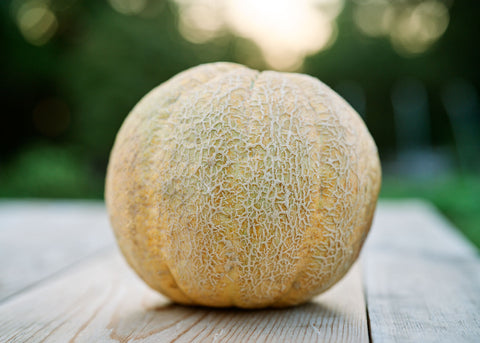
Melons have traveled with gardeners for thousands of years, gathering the warmth of summer into fragrant, sweet fruit hidden beneath broad leaves. In American gardens, the word cantaloupe usually refers to the familiar netted, orange-fleshed type of muskmelon.
Other muskmelons include honeydew, Crenshaw, Casaba, and Armenian cucumber. Though their rind, flesh, and harvest cues differ, they share the same basic growing needs: warm soil, full sun, steady moisture, active pollinators, and enough summer heat to ripen well.
Growing Guide
Timing
Direct sow after frost danger has passed, the soil has warmed to at least 65°F, and nights remain reliably mild. Melons make little progress in cold soil and are easily checked by chilly weather.
In shorter seasons, start seeds indoors about 3–4 weeks before transplanting. Most varieties need roughly 70–100 days to mature, depending on the type and cultivar.
Sowing & Starting
Sow seeds about 1 inch deep. Space plants roughly 18–24 inches apart in rows at least 4 feet apart, giving the vines room to spread and leaves enough air circulation.
When starting indoors, use individual containers and transplant while plants are still young. Harden them gradually and handle the roots carefully, since melons dislike disturbance. Wait for genuinely warm conditions rather than allowing seedlings to become oversized indoors.
Returns details
Show customers how much time they have for testing your products