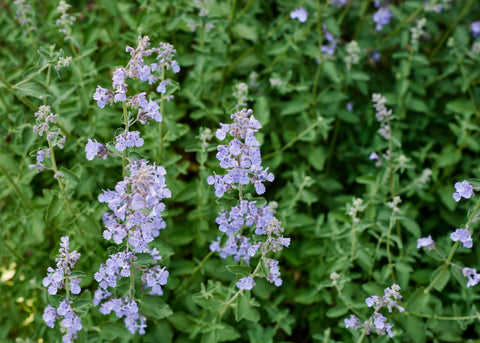
Catnip has been grown in herb gardens for centuries, known for its soft gray-green leaves, mint-family fragrance, and famous appeal to cats. Native to parts of Europe and Asia, it has long been used in traditional gardens for tea, pollinators, and everyday household usefulness.
In the garden, catnip is a hardy, easygoing perennial with small white to pale lavender flowers that bees and beneficial insects readily visit. It grows quickly once established, tolerates ordinary garden conditions, and can be harvested fresh or dried for tea blends, sachets, cat toys, and pollinator-friendly plantings.
Growing Guide
Timing
Start catnip indoors about 6–8 weeks before the expected last spring frost, or direct sow after the danger of hard frost has passed. Seeds can be slow or uneven to germinate, and a brief period of cool, moist conditions may improve germination.
Transplant seedlings outdoors in spring once plants are sturdy and the soil can be worked. Established catnip is cold hardy in many regions and returns from the crown each year where winter conditions suit it.
Sowing & Starting
Sow seeds shallowly, pressing them into the surface of moist seed-starting mix and covering only lightly. Keep the soil evenly moist until germination, which may take one to three weeks.
Provide strong light once seedlings emerge. Transplant young plants when they are well rooted, spacing them about 18–24 inches apart. Catnip can also be grown in containers, which may help keep spreading plants more contained.
Returns details
Show customers how much time they have for testing your products