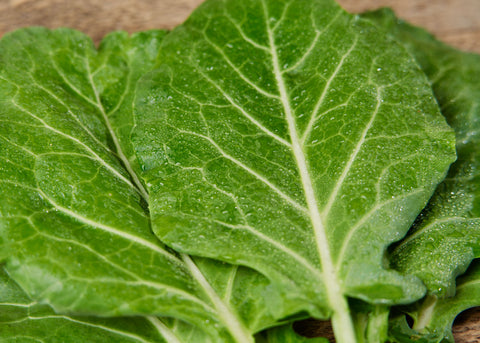
Collards are among the oldest cultivated forms of cabbage, carrying broad, sturdy leaves instead of folding themselves into a head. Long treasured in Southern kitchens, they are a crop of abundance—one planting offering leaf after leaf through summer heat, cool autumn rain, and the first frosts of winter.
Their smooth blue-green leaves grow from an open central stalk and are generally more tolerant of heat than kale. Collards are cool-season biennials usually grown as annuals, thriving through steady moisture, regular harvest, and the gentler temperatures of spring and fall.
Growing Guide
Timing
Direct sow collards about 3–5 weeks before the expected last spring frost, or start seeds indoors about 4–6 weeks before transplanting. Harden seedlings gradually and set them out while weather remains cool.
Collards tolerate both heat and cold better than many other brassicas. For a fall crop, sow about 8–10 weeks before the expected first frost. Mature plants withstand light freezes, and cool weather often improves flavor.
Sowing & Starting
Sow seeds about ¼–½ inch deep and keep the soil evenly moist until seedlings emerge. Thin or transplant full-sized plants to about 12–18 inches apart.
Plants may initially be spaced more closely, with every other plant harvested young to create room for those left to mature. Closer spacing also works where the crop is intended mainly for baby leaves.
Returns details
Show customers how much time they have for testing your products