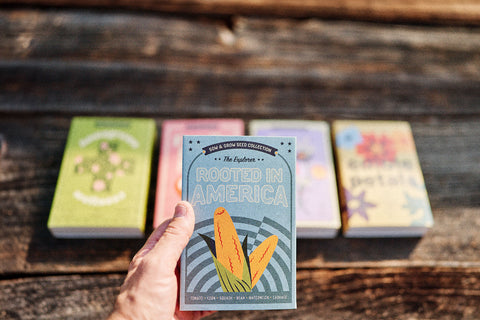
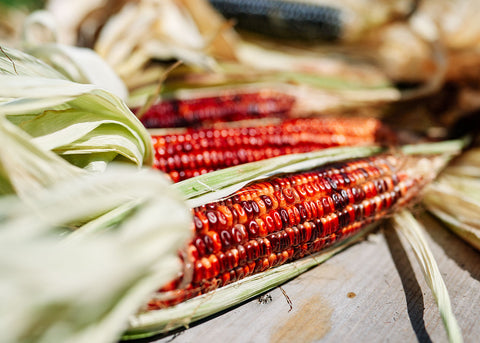
Corn was first domesticated in Mexico thousands of years ago and became one of the great food crops of the Americas. Indigenous growers developed many forms, including sweet corn for fresh eating, popcorn, flint and flour corn for grinding, and dent or field corn for dry grain, feed, and storage.
All types are warm-season, wind-pollinated plants that grow best in blocks rather than a single long row. Sow into warm soil, provide full sun and steady moisture, and allow enough time for the crop to reach the stage you plan to harvest—tender and milky for sweet corn, or fully mature and dry for grain corn.
Growing Guide
Timing
Sow corn outdoors after frost danger has passed and the soil has warmed. Standard and dry corn types generally germinate well around 55–60°F, while supersweet corn performs best in soil closer to 65°F.
For a longer sweet-corn harvest, make successive sowings or grow varieties with different maturity dates. A practical method is to sow the next planting when the previous crop has three or four leaves.
Dry corn needs a longer season because the ears must mature fully on the stalk. Choose varieties that can finish before cold, wet fall weather arrives.
Sowing & Starting
Direct sow seeds about 1–1½ inches deep in warm, moderately moist soil. Plant slightly deeper in light or sandy soil and shallower in cool, heavy soil.
Thin plants to about 8–12 inches apart, with rows roughly 30–36 inches apart. Plant at least three or four short rows together so wind-blown pollen can reach the silks more evenly.
Corn usually performs best when direct sown. If the season is very short, start seeds in deep individual pots and transplant while seedlings are young and roots remain undisturbed.
Returns details
Show customers how much time they have for testing your products