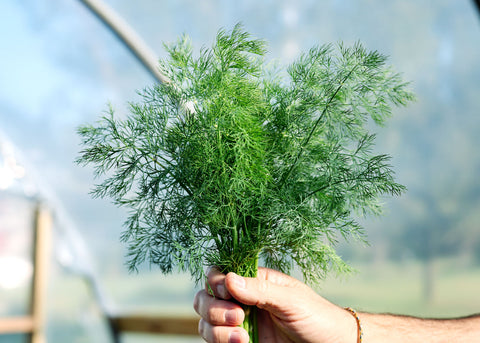
Dill has been grown for thousands of years, treasured for its feathery leaves, fragrant seed, and bright place in kitchens from the Mediterranean to northern Europe and beyond. Few herbs carry such a clear garden memory: soft green fronds, yellow flower umbels, and the unmistakable scent of pickles, potatoes, fish, vinegar, and summer preserving.
In the garden, dill is both useful and beautiful. The feathery leaves bring fresh flavor to the kitchen, the mature seed is gathered for pickling and spice blends, and the airy flowers draw bees, hoverflies, and other beneficial insects into the garden. Dill grows quickly in cool to warm weather and is best sown in small successions for a longer harvest.
Growing Guide
Timing
Direct sow dill in early spring once the soil can be worked. Dill grows best in cool to mild weather, though it can continue into summer when moisture is steady and plants are not overcrowded.
For a longer leaf harvest, sow small batches every two to three weeks through spring and again in late summer for fall use. In mild climates, dill may also be fall sown for cool-season growth.
Sowing & Starting
Sow seeds about ¼ inch deep in prepared garden soil. Keep the seedbed evenly moist until germination, which usually takes one to two weeks.
Dill develops a taproot and is best direct sown where it will grow. Thin seedlings to about 8–12 inches apart for full-sized plants. For leaf harvest, plants can be spaced a little closer and harvested young. Dill can grow in containers, but taller varieties need a deep pot and protection from strong wind.
Returns details
Show customers how much time they have for testing your products