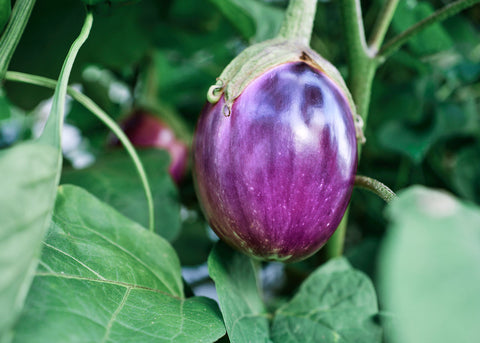
Eggplant has been cultivated in Asia for centuries, with a long history in India, southern China, and Southeast Asia. Early growers gradually selected wild, bitter fruits for larger size, better flavor, and the wide range of shapes and colors found in gardens today.
Eggplants are warm-season plants that thrive in full sun and sustained summer heat. Fruits may be round, elongated, striped, white, green, lavender, or deep purple. Start seeds indoors, transplant only after nights have warmed, and harvest while the skin is glossy and the flesh remains tender.
Growing Guide
Timing
Start eggplant seeds indoors about 8–10 weeks before the expected last spring frost.
Transplant after frost danger has passed, the soil has warmed, and nighttime temperatures remain consistently above about 55°F. Eggplants grow poorly in cold conditions, so waiting for settled warmth usually produces stronger plants.
Sowing & Starting
Sow seeds about ¼ inch deep in moist seed-starting mix. A heat mat is strongly recommended and can greatly improve germination speed and uniformity. Keep the mix around 75–85°F until seedlings emerge, checking moisture often because heated trays dry faster.
After germination, remove the heat mat and provide strong overhead light. Pot seedlings up as needed and harden them off gradually before transplanting.
Space most plants about 18–24 inches apart.
Returns details
Show customers how much time they have for testing your products