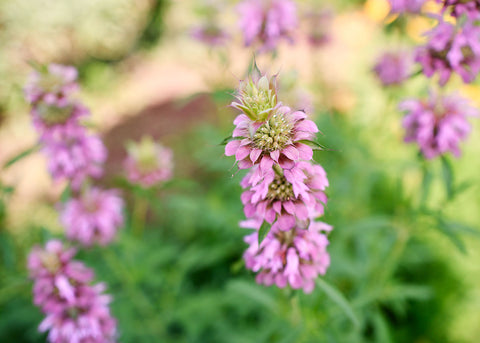
Monarda is a North American native herb known for fragrant foliage, unusual crown-like flowers, and the steady activity of bees, butterflies, hummingbirds, and other garden visitors. Often called bee balm, bergamot, horsemint, or lemon mint, it has long held a place in native plantings, herb gardens, cottage borders, and traditional household use.
Two commonly grown species have different rhythms. Monarda fistulosa, often called wild bergamot, is a hardy perennial with lavender-pink flowers that returns and gradually spreads where conditions suit it. Monarda citriodora, commonly called lemon mint or lemon bee balm, is usually grown as an annual or short-lived perennial and produces stacked flower clusters with a distinctly citrus-scented foliage. Both bring height, fragrance, pollinator value, and a loose prairie beauty to the garden.
Growing Guide
Timing
Start monarda indoors about 8–10 weeks before the expected last spring frost, or sow outdoors in fall or early spring. A short period of cool, moist conditions can improve germination for many monarda seeds, especially perennial M. fistulosa.
Transplant well-rooted seedlings after severe frost has passed. Monarda fistulosa may flower lightly during its first year but usually becomes fuller and more productive in later seasons. Monarda citriodora grows more quickly and commonly flowers during its first season, making it useful where fast summer color and pollinator activity are wanted.
Sowing & Starting
Sow the small seeds on the surface of moist seed-starting mix and press them gently into place. Cover only barely, since light supports germination. Keep the surface evenly moist without making it soggy.
Germination may take about two to four weeks and can be somewhat uneven. Provide strong light and good airflow as soon as seedlings emerge. Harden plants gradually before transplanting.
Space plants about 12–24 inches apart, depending on the species and mature size. Give perennial M. fistulosa additional room where it can form expanding clumps. M. citriodora can be planted in drifts or informal groups for a fuller first-season display.
Returns details
Show customers how much time they have for testing your products