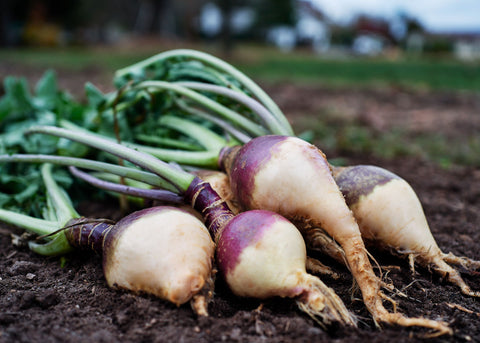
Rutabagas are a patient garden crop, swelling slowly beneath the soil as summer gives way to cooler days. Their golden flesh and purple-brushed shoulders have long earned a place in northern kitchens, where they were valued as dependable roots for roasting, mashing, and winter storage.
Sometimes called Swedish turnips or swedes, rutabagas are larger, denser, and slower-growing than ordinary turnips. They are cool-season biennials usually grown as annuals, producing their sweetest, smoothest roots when growth is steady and the crop matures in cool autumn weather.
Growing Guide
Timing
Direct sow rutabagas so the roots mature during cool weather. In many climates, this means sowing in early to midsummer for harvest after the first light frosts.
Allow about 90–110 days before the first hard freeze, depending on the variety. Rutabagas tolerate frost well, and cool autumn temperatures often improve their sweetness and texture.
Sowing & Starting
Sow seeds about ½ inch deep and 1 inch apart in loose, well-prepared soil. Keep the seedbed evenly moist until seedlings emerge.
Thin plants to about 4–6 inches apart once they are established. Rutabagas are best direct sown because transplanting may disturb the developing root. Young thinnings may be used as tender greens.
Returns details
Show customers how much time they have for testing your products