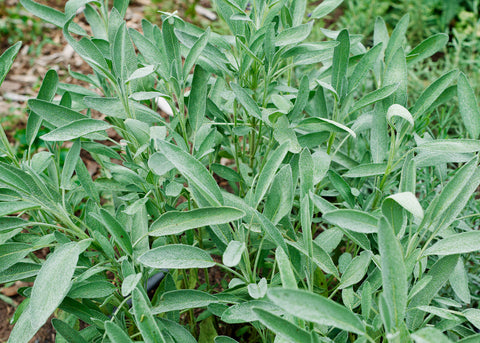
Sage has been grown around the Mediterranean for centuries, valued for its soft gray-green leaves, warm fragrance, and lasting place in kitchen and household traditions. Its earthy, slightly resinous flavor is especially welcome in breads, beans, poultry, squash, potatoes, sauces, and autumn meals.
In the garden, culinary sage forms a woody perennial shrub with velvety foliage and spikes of purple-blue flowers. It brings structure to herb beds, borders, containers, and dry garden edges, while the flowers draw bees and other beneficial insects through the season.
Growing Guide
Timing
Start sage indoors about 6–8 weeks before the expected last spring frost, or direct sow outdoors after the soil has warmed. Sage grows slowly at first, so indoor starting often gives plants a stronger beginning.
Transplant after severe frost has passed and seedlings are well rooted. In mild climates, sage may also be planted in early fall, giving roots time to establish before winter. Established plants are perennial where drainage and cold conditions suit them.
Sowing & Starting
Sow seeds about ¼ inch deep in moist seed-starting mix. Keep the soil evenly moist until germination, which usually takes one to three weeks.
Provide strong light and good airflow after seedlings emerge. Harden plants gradually before transplanting, spacing them about 18–24 inches apart. Sage also performs well in containers with excellent drainage.
Returns details
Show customers how much time they have for testing your products