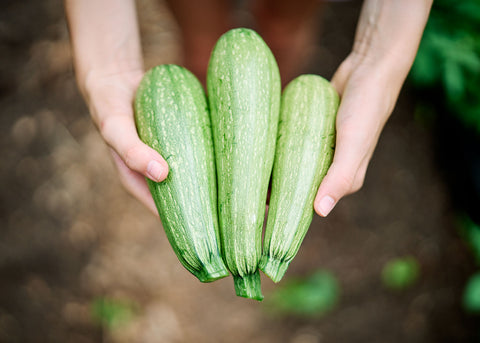
Squash has been cultivated in the Americas for thousands of years. Summer squash differs from winter squash mainly in when it is gathered: the fruits are harvested young, while the skin, seeds, and flesh are still tender. Zucchini, yellow crookneck, straightneck, cocozelle, and pattypan all belong to this broad group.
Most summer squash grows on compact, bushy plants that produce heavily once warm weather arrives. Sow into warm soil, leave plenty of room around each plant, and keep moisture steady through flowering and fruit development. Check the plants often—small fruits can reach harvest size in only a few days.
Growing Guide
Timing
Sow outdoors after frost danger has passed and the soil has warmed to at least 60–65°F. Cold, wet soil slows germination and increases the chance of seed rot.
For an earlier start, sow indoors 2–3 weeks before transplanting. Move plants outside only after nights remain above about 50°F and the soil is warm.
In long-season areas, a second sowing in early or midsummer can replace older plants affected by pests or disease.
Sowing & Starting
Direct sow seeds about 1 inch deep. Space bush varieties 24–36 inches apart, with enough room between rows for airflow and harvesting. For hill planting, sow several seeds and thin to the strongest two or three plants.
Start indoor seedlings in individual pots because squash roots dislike disturbance. Transplant while plants are small, usually with no more than two or three true leaves.
Keep the soil evenly moist during germination. Avoid saturated conditions, especially before seedlings emerge.
Returns details
Show customers how much time they have for testing your products