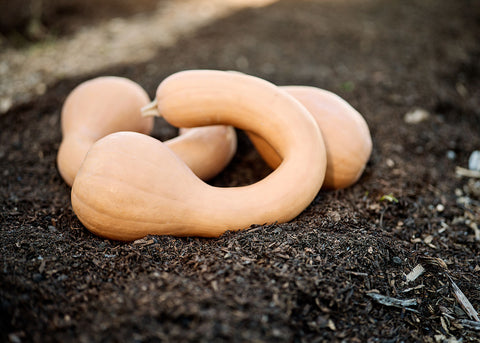
Winter squash and pumpkins have long marked the turning of the garden year, beginning as broad green vines in summer and ending as richly colored fruit gathered before frost. Their shapes range from small ribbed acorns and smooth pie pumpkins to long-necked squash, great blue-gray keepers, and sprawling heirloom varieties.
Unlike summer squash, these crops are allowed to mature fully on the vine. They need warm soil, generous space, reliable pollination, and a long season to develop hard rinds, sweet flesh, and good storage quality.
Growing Guide
Timing
Direct sow after frost danger has passed, the soil has warmed to at least 65°F, and nights are reliably mild. Cold soil slows germination and increases the chance of seed decay.
In short-season climates, start seeds indoors about 3–4 weeks before transplanting. Avoid starting too early, since large seedlings become root-bound and transplant poorly. Choose varieties with enough time to mature before the first expected hard freeze.
Sowing & Starting
Sow seeds about 1 inch deep. Plant two or three seeds together and thin to the strongest seedling after emergence, or sow individually at the final spacing.
Bush and compact types may need 3–4 feet between plants, while vigorous vines often need 4–6 feet or more. Allow ample room between rows, or guide vines along bed edges where they will not smother neighboring crops. When transplanting, handle the roots gently and plant at the same depth they grew in the pot.
Returns details
Show customers how much time they have for testing your products