
Purple Plum - Radish Seeds

Price:$4.35
Open-Pollinated
Quick Facts
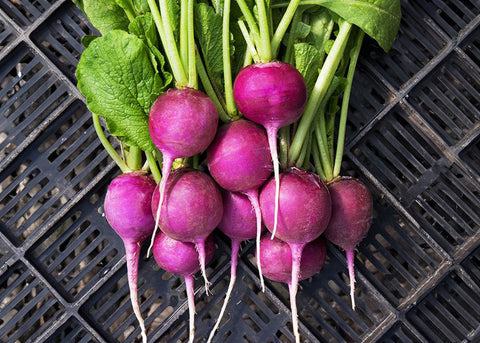
  • Violet-purple roots hide crisp, white centers
  • Quick, smooth harvests with mild flavor when young
  • Bright garden crunch for salads, snacks, and quick pickles
  • 22 days from sowing
  • Raphanus sativus
Choose size

🌱 Sow with Confidence—One-Year Seed Guarantee

Purple Plum radish produces round roots in a rich violet-purple color with crisp white flesh inside. The roots are quick to mature, smooth, and mild when pulled young, bringing a bold color change to the familiar spring radish patch.

Use fresh in salads, snack plates, sandwiches, and quick pickles. Purple Plum is especially satisfying for kids, market bunches, and gardeners who like fast crops that still manage to feel a little unexpected.

Orders ship from Pennsylvania within 1–2 business days via USPS. Orders $79+ ship free within the contiguous United States.

Unopened items may be returned within 30 days. If something arrives damaged, incomplete, or incorrect, we’ll make it right.

View Shipping Policy

We stand behind every packet. Our seeds are untreated, germination-tested, true to variety, and covered for one year from purchase.

If seeds arrive damaged, fail to germinate under reasonable growing conditions, or do not grow true to type, contact us and we’ll make it right with a replacement, store credit, or refund.
View Refund, Return & Guarantee Policy

Previous
Next

FAMILY OWNED

Hand packed in Pennsylvania by our family.

LAB TESTED

Third-party tested for reliable germination.

NON-GMO

Open-pollinated varieties for home gardens & seed saving.

UNTREATED SEED

Never coated with chemical seed treatments.

Radish Growing Basics

Radishes have been cultivated for thousands of years, likely first in Asia before spreading through the Mediterranean, Europe, and beyond. Over time, growers developed small spring radishes, larger winter types, long daikons, leafy forms, and varieties grown for their edible seed pods.

Radishes are quick-growing, cool-season roots that fit easily into beds, containers, and spaces between slower crops. Direct sow into loose soil, thin promptly, and keep moisture steady. Spring radishes may be ready within a month, while larger winter and daikon types need more time and room.

Sow spring radishes several weeks before the average last frost, once the soil can be worked. Seeds germinate readily in soil around 40°F and emerge faster as it warms.

Make small sowings every 1–2 weeks while weather remains cool. Pause when sustained heat arrives, then resume in late summer for a fall crop.

Winter radishes and most daikons need a longer season. Sow them early enough to mature during cool fall weather, using the variety’s days to maturity and your first expected frost as guides.

Direct sow seeds ¼–½ inch deep. Space small spring radishes about 1–2 inches apart and larger winter or daikon types 4–6 inches apart, following the packet for unusually large varieties.

Radishes do not need to be started indoors. Their quick growth and developing taproots make direct sowing the better choice.

Keep the seedbed moist until seedlings emerge, usually within 3–10 days. Thin early because crowded plants often produce leafy tops and undersized roots.

Grow radishes in full sun during cool weather. Light afternoon shade can help as temperatures rise. Use loose, well-drained soil so roots can expand without obstruction.

Provide frequent, even moisture. Dry soil and interrupted growth can make roots woody, pithy, cracked, or strongly flavored.

Radishes need only moderate fertility. Excess nitrogen encourages leaves instead of roots. Weed carefully so nearby plants do not compete with the shallow roots.

Harvest spring radishes once the roots reach the expected size, often about 1 inch across. Check them frequently because the best harvest window may last only a few days in warm weather.

Winter radishes and daikons can remain in the ground longer and often develop better flavor in cool conditions. Harvest before the soil freezes or the roots become oversized and pithy.

Pull the entire plant, remove the tops, and refrigerate the roots promptly. Leaving the greens attached draws moisture from the root and shortens storage life.