

Italian Giant - Organic Parsley Seeds
🚚 FREE SHIPPING for all orders over $79!
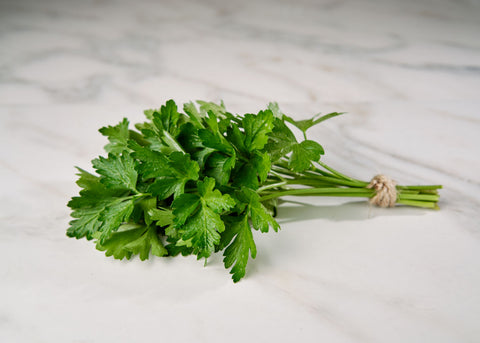
Italian Giant parsley grows tall, leafy plants with broad, flat leaves and a bold, clean flavor that stands up beautifully in the kitchen. This old garden herb is prized by cooks because the stems and leaves are easy to chop, easy to gather, and useful in nearly every savory dish.
Plants bring deep green abundance to beds and containers, holding well through cool weather and offering repeated harvests when cut from the outside. Use it by the handful in sauces, salads, soups, roasted vegetables, and the kind of meals that need something fresh at the end.
Scientific name: Petroselinum crispum
Life cycle: Biennial, typically grown as an annual
Days to maturity: 75-90 days from sowing
Plant height: 2-3'
Every order is packed with care by our small team in Pennsylvania and typically ships within 2–3 business days—often by the next business day. We ship throughout the United States using USPS and UPS.
Unopened items may be returned within 30 days of delivery. If an order arrives damaged, incomplete, or incorrect, please contact us so we can make it right.
We stand behind every packet we sell. Our seeds are carefully selected, tested for germination, untreated, and guaranteed to be true to variety.
Your seeds are covered for one year from the date of purchase. If they fail to germinate under reasonable growing conditions, arrive damaged, or do not grow true to type, contact us and we’ll make it right with a replacement, store credit, or refund.
FAMILY OWNED
Hand packed in Pennsylvania by our family.
LAB TESTED
Third-party tested for reliable germination.
NON-GMO
Open-pollinated varieties for home gardens & seed saving.
UNTREATED SEED
Never coated with chemical seed treatments.
Parsley Growing Basics

Parsley has been grown around the Mediterranean for centuries, valued for its clean, fresh flavor and dependable place in kitchens around the world. Whether tucked into soups, sprinkled over roasted vegetables, blended into sauces, or enjoyed fresh in salads, it remains one of the most versatile herbs a gardener can grow.
Both curly and flat-leaf parsley are easy additions to vegetable gardens, raised beds, and containers. Although parsley is technically a biennial, it is usually grown as an annual for its abundant foliage. Once established, it produces a steady harvest through spring, summer, and often well into fall.
Start parsley indoors about 8–10 weeks before the expected last spring frost, or direct sow outdoors as soon as the soil can be worked in spring. Parsley germinates slowly, so starting early helps plants become established before warm weather arrives.
For continuous harvests, sow another crop in midsummer for fall picking. Established plants tolerate light frosts and often continue producing after many annual herbs have slowed.
Sow seeds about ¼ inch deep in moist seed-starting mix or prepared garden soil. Keeping the soil consistently moist is important, as parsley may take two to four weeks to germinate.
Provide strong light for indoor seedlings and harden them gradually before transplanting outdoors. Space plants about 8–12 inches apart so they have room to develop full leafy rosettes. Parsley also performs well in containers with regular watering.
Choose a location with full sun to partial shade and fertile, well-drained soil enriched with compost. Consistent moisture encourages tender, flavorful leaves throughout the season.
Harvest outer stems regularly rather than removing the center of the plant. Frequent picking encourages fresh growth and keeps plants productive for many months.
If plants remain in the garden through winter, they will flower during their second season. The blooms attract hoverflies, bees, parasitic wasps, and other beneficial insects, while the foliage serves as an important host plant for black swallowtail butterfly caterpillars.
Begin harvesting once plants have produced several mature stems. Cut the outer stalks near the base, allowing the center of the plant to continue producing new growth.
Fresh parsley keeps well in the refrigerator, can be frozen for later cooking, or dried gently in a warm, shaded place. Flat-leaf parsley generally retains more flavor after drying than curly varieties.


