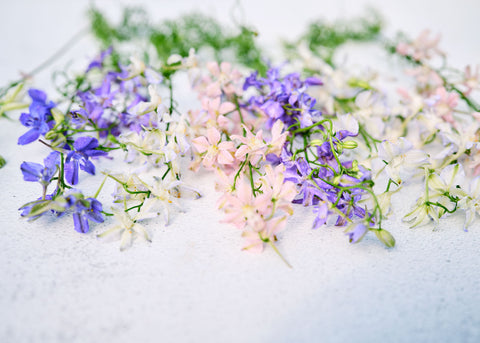
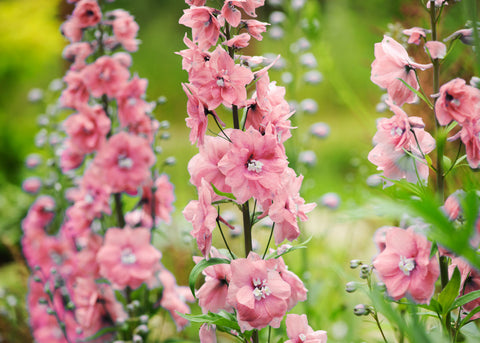
Larkspur has graced cottage gardens for centuries with its tall, graceful flower spikes and cool shades of blue, lavender, pink, purple, and white. Sometimes called annual delphinium, larkspur (Consolida ajacis, formerly Delphinium consolida) is prized for bringing elegant height and early-season color to borders, cutting gardens, and naturalistic plantings.
As one of the earliest flowers to bloom each season, larkspur thrives in cool weather and rewards early sowing with long stems that are exceptional for fresh bouquets and dried arrangements. Its nectar-rich flowers also attract bees and other beneficial insects, making it as valuable to pollinators as it is to flower growers.
Larkspur Growing Guide
Timing
Larkspur performs best when sown during cool weather. Direct sow seed outdoors in late fall where winters are mild, or sow in very early spring as soon as the soil can be worked. Exposure to winter cold or naturally cool spring soils often improves germination.
Larkspur does not tolerate summer heat well during establishment, making early planting the key to healthy plants and abundant blooms.
Sowing & Starting
Direct sow seeds about ¼ inch deep into prepared soil. Larkspur develops a taproot and generally dislikes transplanting, so direct sowing produces the strongest plants.
Keep the soil evenly moist until germination, which typically occurs in two to three weeks under cool conditions. Thin seedlings to 8–12 inches apart to promote sturdy stems and good air circulation.
Growing & Care
Plant larkspur in full sun with fertile, well-drained soil. Cool spring temperatures encourage vigorous growth and long flower spikes, while hot summer weather naturally signals the end of its flowering season.
Water regularly during dry spells but avoid overly wet soil. Taller varieties may benefit from light support, particularly in windy locations or cutting gardens.
Larkspur is an excellent companion flower for pollinator gardens, attracting bees, bumblebees, butterflies, and other beneficial insects. Its upright flower spikes combine beautifully with bachelor’s buttons, foxgloves, snapdragons, and other cool-season flowers.
Harvesting
Harvest flower spikes when the lower one-third to one-half of the florets have opened. The remaining buds continue opening after cutting, providing excellent vase life.
Larkspur also dries exceptionally well. Harvest stems before flowers begin dropping naturally and hang them upside down in a warm, dry location with good airflow.
Nutrition & Uses
Larkspur is grown primarily for ornamental beauty, pollinator value, and outstanding cut flowers. Its tall flower spikes bring elegance and vertical interest to cottage gardens, borders, and fresh or dried floral arrangements.
Note: All parts of larkspur are considered toxic if eaten by people or livestock and should be grown for ornamental enjoyment rather than culinary or medicinal use.
Pests & Diseases
Larkspur is generally easy to grow but may occasionally attract aphids, slugs, or snails while plants are young. Powdery mildew and crown rot may develop where plants become overcrowded or remain wet for extended periods.
Provide good air circulation, well-drained soil, and water near the base of the plant to encourage healthy growth.
Seed Saving
Larkspur is primarily insect-pollinated and may cross with nearby larkspur varieties. If maintaining a particular strain such as Earl Grey or Imperial Mix, grow one variety for seed or provide adequate isolation.
After flowering, narrow seed pods develop along each flower spike. Allow the pods to dry on the plant until they turn tan and begin to split. Harvest the stems before the pods fully open, then finish drying indoors if needed. Gently crush the dry pods to release the black seeds and store them in a cool, dark, dry place.
Extra Tips
Direct sow whenever possible for the strongest plants.
Plant in fall or very early spring for best germination.
Harvest frequently for fresh bouquets.
Excellent for drying and long-lasting arrangements.
Allow a few flower spikes to mature naturally if saving seed.