Mustard greens bring a lively edge to the cool-season garden, their broad leaves carrying flavors that range from gently peppery to bold and bracing. Grown for centuries across Asia, Africa, and Europe, they remain one of the quickest ways to turn a handful of seed into a generous harvest.
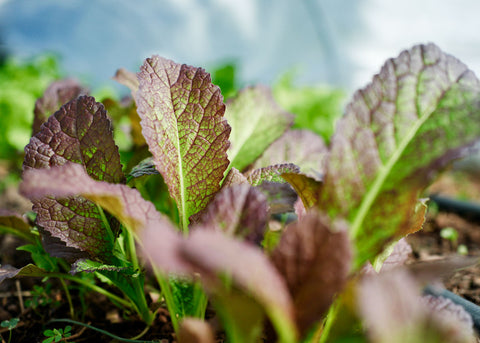
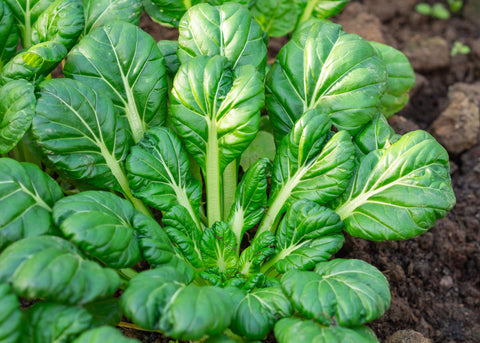
Varieties may be smooth, curled, deeply frilled, green, red, or purple. Mustard grows rapidly in cool weather, offering tender baby leaves first and fuller, more strongly flavored greens as the plants mature.
Mustard Green Growing Guide
Timing
Direct sow mustard greens about 3–5 weeks before the expected last spring frost, once the soil can be worked. Seeds germinate readily in cool soil, and many varieties are ready for baby-leaf harvest in only a few weeks.
Make small sowings every 1–2 weeks while weather remains mild. Sow again in late summer for fall harvest. Mustard tolerates light frost, but sustained heat encourages bolting and gives the leaves a sharper flavor.
Sowing & Starting
Sow seeds about ¼–½ inch deep and keep the seedbed evenly moist until seedlings emerge. Thin plants to 4–6 inches apart for mature leaves, or leave them closer for baby greens.
Mustard is usually best direct sown because it grows quickly and establishes easily. Use the thinnings in salads rather than allowing crowded seedlings to compete.
Growing & Care
Choose a site with full sun during cool weather. Light afternoon shade can help extend the harvest as spring temperatures rise.
Grow mustard in fertile, well-drained soil enriched with finished compost. Keep moisture steady so leaves remain tender and growth does not stall. Mulch lightly once plants are established to cool the soil, reduce weeds, and protect soil structure.
Harvesting
Harvest baby leaves once they are large enough to use. For mature plants, pick the largest outer leaves and leave the center growing, or cut the entire plant just above soil level.
Young leaves are mildest and most tender. Harvest promptly as flower stalks begin to rise, since the leaves become tougher and more pungent once plants bolt.
Nutrition & Uses
Mustard greens provide fiber, folate, calcium, and vitamins A, C, and K. Their deeply colored leaves contain carotenoids, while red and purple varieties may also contain anthocyanins.
Use young leaves raw in salads or sandwiches. Mature greens may be sautéed, braised, steamed, added to soups and stews, fermented, or cooked with beans, grains, and savory meats.
Pests & Diseases
Flea beetles may pepper young leaves with small holes, while cabbageworms, aphids, and slugs may also feed on the crop. Inspect plants regularly, remove pests by hand where practical, and protect young sowings with insect netting where pressure is heavy.
Crop rotation, clean beds, good airflow, nearby flowering plants, and watering near the soil help reduce problems. Avoid planting mustard and related brassicas repeatedly in the same ground.
Seed Saving
Mustard greens are insect-pollinated annuals or biennials, depending on the species and growing conditions. Common garden mustards may belong to Brassica juncea or Brassica rapa, so check the variety’s botanical name before planning isolation.
Varieties cross readily with others of the same species. Grow only one flowering variety of that species nearby or provide generous isolation. Save seed from several healthy, true-to-type plants.
Allow the seedpods to turn tan and begin drying, then cut the stalks before they shatter. Finish drying under cover, thresh, clean, and store the fully dry seed in a cool, dark place.