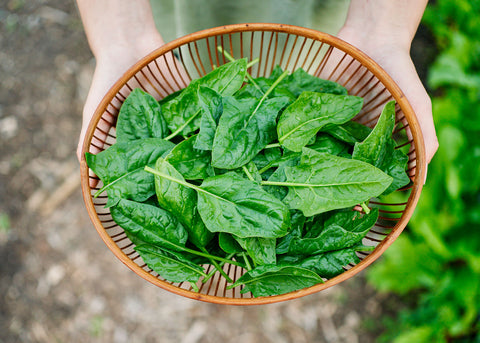
Spinach has been grown for centuries from ancient Persia across Europe and into gardens around the world. Few crops capture the freshness of the cool-season garden quite like its tender green leaves, gathered when the air is still crisp and the soil holds spring moisture.
Varieties may have smooth, semi-savoyed, or deeply crinkled leaves. Spinach grows quickly in cool weather, but lengthening days and heat soon encourage it to flower, making careful timing the key to a sweet and generous harvest.
Spinach Growing Guide
Timing
Direct sow spinach about 4–6 weeks before the expected last spring frost, once the soil can be worked. Seeds germinate in soil as cool as about 40°F, though emergence is faster near 50°F.
Make small sowings every 1–2 weeks while conditions remain cool. For fall harvest, sow as summer heat begins to ease. Established plants tolerate frost well, and late plantings may overwinter beneath mulch or protection for an early spring harvest.
Sowing & Starting
Sow seeds about ½ inch deep and 1–2 inches apart. Keep the soil evenly moist until seedlings emerge, which commonly takes 7–14 days depending on temperature.
Thin plants to about 3–4 inches apart for mature leaves, or leave them closer for baby-leaf harvest. Spinach is usually best direct sown because seedlings have delicate roots and may be slow to recover from transplanting.
Growing & Care
Choose a site with full sun during cool weather. Light afternoon shade can help extend the harvest as temperatures rise.
Grow spinach in loose, well-drained soil enriched with finished compost. Its shallow roots need steady moisture, so water whenever the surface begins to dry. A light organic mulch can help keep the soil cool, but leave the soil exposed if slugs become troublesome.
Harvesting
Begin harvesting baby leaves once they are large enough to use. Pick the outer leaves first and allow the center to continue growing, or cut the entire plant near soil level.
Spinach is commonly ready about 40–50 days after sowing. Harvest promptly when a central flower stalk begins to rise, since the leaves quickly become tougher and more bitter as the plant bolts.
Nutrition & Uses
Spinach provides fiber, folate, vitamins A, C, and K, along with iron, magnesium, potassium, and carotenoids such as lutein and beta-carotene.
Use young leaves fresh in salads and sandwiches. Mature leaves may be sautéed, steamed, added to soups, folded into eggs and pasta dishes, or blanched and frozen. Cooking greatly reduces the volume, making a large harvest surprisingly easy to use.
Pests & Diseases
Leafminers may leave pale, winding tunnels through the leaves. Inspect leaf undersides for eggs, remove badly affected foliage, and use insect netting where leafminers are a recurring problem.
Aphids, slugs, and flea beetles may also appear. Crop rotation, clean beds, good airflow, soil-level watering, and nearby flowering plants that support beneficial insects help keep problems in balance. Remove plants showing severe yellowing, distortion, or stunting.
Seed Saving
Spinach is wind-pollinated, and male and female flowers are commonly carried on separate plants. Different spinach varieties cross readily, so grow only one variety for seed nearby or provide generous isolation.
Allow a broad group of healthy, true-to-type plants to flower rather than harvesting them all. Keep both early-flowering male plants and later female plants until pollination is complete.
Seed is ready when the female plants turn yellow-brown and the seed clusters become dry and firm. Cut the stalks, finish drying them under cover, then rub or thresh away the seed. Store fully dry seed in a labeled container in a cool, dark place.
Extra Tips
Keep the seedbed consistently moist until seedlings are established.
Sow in loose soil that drains well but does not dry out quickly.
Harvest promptly when warm weather arrives.
Grow beneath taller crops for light shade in late spring.
Try a protected fall planting for early spring leaves.