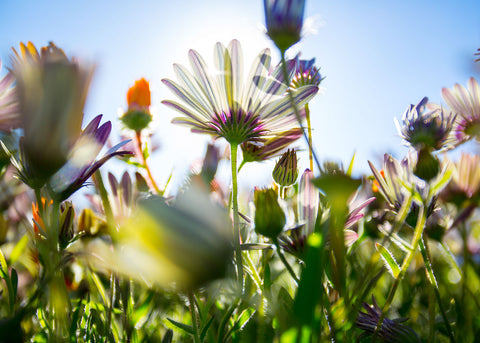
A wildflower mix turns open ground into a changing patchwork of color, movement, and pollinator activity. Rather than blooming all at once, the planting unfolds through the seasons as quick annuals flower first and slower biennials and perennials settle in for the years ahead.
Bucktown’s Bee Wildflower Mix contains a larger share of perennial species, including butterfly milkweed, New England aster, lanceleaf coreopsis, echinacea, gaillardia, liatris, perennial lupine, bee balm, and prairie coneflower. Expect annuals to provide much of the first-year color while many perennials establish roots and become more prominent in later seasons. The Hummingbird & Butterfly Mix contains more annual and biennial flowers, creating quicker first-season bloom while also including lasting plants such as butterfly milkweed, columbine, foxglove, penstemon, and Maltese cross. Annuals are usually most visible during the first year of a mixed planting, while perennial species may take longer to establish and flower.
Wildflower Mix Growing Guide
Timing
Sow in early spring after the ground can be prepared, or in late fall after temperatures have cooled enough that seed will remain dormant until spring. Fall sowing is especially useful for mixtures containing perennial species that benefit from natural winter cold before germination.
In mild-winter regions, sow during the coolest dependable planting window rather than during summer heat. Spring sowings need regular moisture during establishment, while dormant fall sowings generally rely on winter weather and spring rainfall.
Sowing & Starting
Remove existing vegetation and prepare a clean, firm seedbed before sowing. Wildflower seedlings compete poorly with established lawn grass and perennial weeds, so site preparation is more important than adding fertilizer.
Mix the seed with dry sand, fine soil, or another lightweight carrier to make even broadcasting easier. Divide the mixture in half, sow the first portion while walking in one direction, then sow the remainder at a right angle. Press or roll the seed firmly against the soil but do not bury it deeply. Good seed-to-soil contact is essential for germination.
Keep spring-sown areas evenly moist until seedlings are established. Avoid using mulch thick enough to block light or smother small seedlings.
Growing & Care
Choose an open site with full sun and well-drained soil. Once established, a wildflower planting usually needs less irrigation and maintenance than a conventional flower bed, but the first season requires patience and weed control.
Annuals such as cosmos, poppies, alyssum, phacelia, larkspur, and zinnias may provide the earliest flowers. Biennials and perennials often spend their first season forming roots and foliage before producing stronger displays in later years. The Bee Mix should gradually become more perennial in character, while the Hummingbird & Butterfly Mix will depend more heavily on annual reseeding to maintain its original balance.
Leave flowers standing through the season to feed bees, butterflies, hummingbirds, and other beneficial wildlife. Avoid deadheading the entire planting if natural reseeding is desired.
Harvesting
Harvest individual stems for bouquets as flowers reach their proper cutting stage, taking lightly so plenty remain for pollinators. The two mixes include useful cutting flowers such as cosmos, asters, larkspur, snapdragons, poppies, coreopsis, gaillardia, zinnias, and ornamental seed heads.
For a meadow-style planting, leave most flowers standing through autumn. Mature seed heads provide texture, support natural reseeding, and offer food and shelter for birds and insects.
Nutrition & Uses
Wildflower mixes are grown primarily for pollinator habitat, seasonal beauty, biodiversity, and reduced areas of bare or frequently mowed ground. The Bee Mix offers a longer-term planting with many perennial nectar and pollen sources, while the Hummingbird & Butterfly Mix emphasizes colorful tubular, open, and nectar-rich flowers in a wider range of annual, biennial, and perennial forms.
These mixes contain many different species, and not every flower is edible. Do not harvest plants for food, tea, or herbal use unless the individual species has been positively identified and is known to be suitable for that purpose.
Pests & Diseases
A diverse wildflower planting rarely experiences one pest or disease across the entire area. Aphids, caterpillars, beetles, slugs, or leafhoppers may affect individual species, while mildew and leaf spots are more likely in crowded or poorly ventilated growth.
Avoid frequent overhead watering once plants are established. Remove severely diseased plants when needed, but allow minor cosmetic damage; many caterpillars and leaf-feeding insects are part of the wildlife the planting is meant to support.
Seed Saving
Saving the original mixture in the same proportions is difficult because each species flowers and ripens at a different time. Some species readily reseed, while others cross with nearby varieties or need winter cold before germinating.
The easiest approach is to leave mature seed heads standing and allow the planting to reseed naturally. To save seed intentionally, collect each recognizable species separately when its pods, capsules, or flower heads are fully dry, then label and store them individually. Mixing all harvested seed together will create a new, changing blend rather than an exact copy of the original mix.
Extra Tips
Prepare the site thoroughly before sowing.
Expect annuals to dominate the first season.
Give perennial-heavy plantings two or more seasons to mature.
Mow established areas once yearly after seeds have ripened and wildlife activity has slowed.
Remove aggressive weeds before they flower and set seed.