Monarda is a North American native herb known for fragrant foliage, unusual crown-like flowers, and the steady activity of bees, butterflies, hummingbirds, and other garden visitors. Often called bee balm, bergamot, horsemint, or lemon mint, it has long held a place in native plantings, herb gardens, cottage borders, and traditional household use.
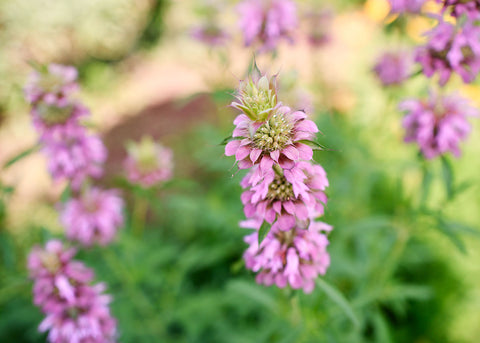
Two commonly grown species have different rhythms. Monarda fistulosa, often called wild bergamot, is a hardy perennial with lavender-pink flowers that returns and gradually spreads where conditions suit it. Monarda citriodora, commonly called lemon mint or lemon bee balm, is usually grown as an annual or short-lived perennial and produces stacked flower clusters with a distinctly citrus-scented foliage. Both bring height, fragrance, pollinator value, and a loose prairie beauty to the garden.
Monarda Growing Guide
Timing
Start monarda indoors about 8–10 weeks before the expected last spring frost, or sow outdoors in fall or early spring. A short period of cool, moist conditions can improve germination for many monarda seeds, especially perennial M. fistulosa.
Transplant well-rooted seedlings after severe frost has passed. Monarda fistulosa may flower lightly during its first year but usually becomes fuller and more productive in later seasons. Monarda citriodora grows more quickly and commonly flowers during its first season, making it useful where fast summer color and pollinator activity are wanted.
Sowing & Starting
Sow the small seeds on the surface of moist seed-starting mix and press them gently into place. Cover only barely, since light supports germination. Keep the surface evenly moist without making it soggy.
Germination may take about two to four weeks and can be somewhat uneven. Provide strong light and good airflow as soon as seedlings emerge. Harden plants gradually before transplanting.
Space plants about 12–24 inches apart, depending on the species and mature size. Give perennial M. fistulosa additional room where it can form expanding clumps. M. citriodora can be planted in drifts or informal groups for a fuller first-season display.
Growing & Care
Choose a site with full sun to light partial shade and well-drained soil. Monarda fistulosa adapts well to average garden soil and becomes fairly drought tolerant once established. Monarda citriodora also tolerates leaner ground but flowers best when young plants receive steady moisture during establishment.
Water regularly during the first season, then more deeply and less often as perennial plants develop stronger roots. Avoid keeping crowns constantly wet. Mulch lightly to protect soil moisture, but leave space around the base of the plants for airflow.
Monarda fistulosa spreads by underground stems and may form a broad colony over time. Divide crowded clumps every few years to renew growth and keep the planting open. Monarda citriodora may self-sow where mature seed is allowed to fall.
Monarda is especially valuable around vegetable beds, orchard edges, perennial borders, and pollinator gardens. Its flowers attract native bees, bumblebees, butterflies, hummingbirds, hoverflies, and other beneficial insects, helping support pollination and a more diverse garden habitat.
Harvesting
Harvest leaves when they are young and fragrant, preferably before or during the early flowering period. Cut stems in the morning after dew has dried, taking only part of an established plant so it can continue growing.
Flowers can be gathered when freshly opened for tea blends, edible garnishes, syrups, bouquets, or drying. M. fistulosatends to have a warm, minty, bergamot-like fragrance, while M. citriodora carries a brighter lemony scent.
For drying, spread clean leaves and flowers on screens or hang small bundles in a shaded, airy place. Once completely dry, remove the leaves and flower parts from the stems and store them in a sealed container away from heat and light.
Nutrition & Uses
Monarda leaves and flowers contain fragrant essential oils and naturally occurring plant compounds that give each species its distinctive scent. Monarda fistulosa is usually more minty, floral, and bergamot-like, while Monarda citriodora has a clearer citrus note.
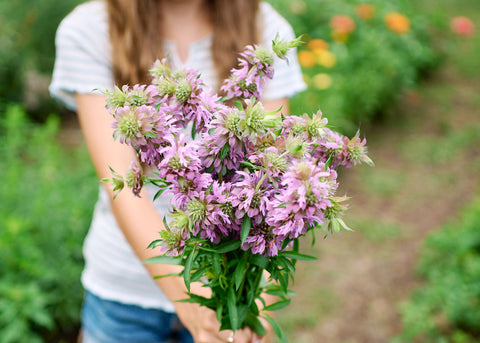
Use the leaves and flowers in tea blends, syrups, herb sugars, fruit dishes, garnishes, vinegars, and fragrant household projects. The flower heads also bring unusual form and texture to fresh bouquets and dried arrangements.
Both species are especially useful in pollinator gardens. Their clustered tubular flowers provide nectar for bees, butterflies, hummingbirds, and other long-tongued visitors through the summer season.
Pests & Diseases
Powdery mildew is the most familiar problem on monarda, particularly where plants are crowded, shaded, or watered overhead. Monarda fistulosa often shows better tolerance than some ornamental bee balm hybrids, but good airflow remains important.
Space plants generously, divide dense clumps, remove badly affected foliage, and water near the soil rather than wetting the leaves. Avoid excessive fertility, which can produce soft, crowded growth.
Aphids, spider mites, thrips, or caterpillars may occasionally feed on the plants. Healthy monarda usually tolerates light damage, and the flowers attract beneficial insects that help support natural pest balance nearby.
Seed Saving
Monarda is insect-pollinated. Different varieties within the same species can cross when flowering nearby, and closely related monarda species may also hybridize under some conditions. Grow one seed-saving variety at a time or provide generous isolation if maintaining a particular type is important.
Choose healthy plants with strong fragrance, good flower form, sturdy growth, and the species traits you want to preserve. Allow selected flower heads to remain until the centers turn brown and dry.
Cut mature heads before they shed heavily, then finish drying them in a warm, airy place under cover. Crush or shake the dry heads over a clean surface to release the small seeds. Screen away the larger chaff and store fully dry seed in a labeled container in a cool, dark place.
Label saved seed carefully as M. fistulosa or M. citriodora, since the two differ in life cycle, fragrance, form, and garden behavior.
Extra Tips
Give plants generous spacing to improve airflow.
Divide crowded M. fistulosa clumps every few years.
Expect M. citriodora to flower more quickly from seed.
Leave some blooms for bees, butterflies, and hummingbirds.